
This example from Edwin Friedman’s video on leadership through self-differentiation will help you manage anxiety in any relationship system.
Show Notes:
Leadership Through Self Differentiation A lecture by Edwin Friedman on YouTube
Become a Patron for as little as $5/month.
Subscribe to my weekly Two for Tuesday email newsletter.
[00:00:23.560]
Welcome to Episode 340 of The Non-Anxious Leader Podcast. I'm Jack Shitama. If you are new to this podcast, you can connect with me at jack@christian-leaders.com. You can email me with your questions, comments, and suggestions for future episodes. In fact, the idea for today's episode came from a listener. You can also get more resources at thenonanxiousleader.com, where you can find out about my books, courses that offer speaking engagements, and coaching practice. You can also subscribe to my Two for Tuesday email newsletter on the website or at the link in the show notes. Finally, if you'd like to support my work for as little as $5 a month, you can find that link in the show notes as well. Thanks in advance for your consideration. Now, without further ado, here is episode 340, Stop Taking Responsibility for Other People's Problems and Start Delegating Anxiety Instead. Thanks to listener Ken Brummel, who email me the idea for this episode. It comes from a 2 hour and 22 minute YouTube video of an Edwin Friedmann lecture on leadership through self-differentiation. It's a great video, and I've seen it before. I'll put a link in the show notes.
[00:01:54.540]
But Ken pointed me to a topic that came up as a question at the 1 hour, nine minute mark, and the answer that Friedmann gave took over 15 minutes. The question that was asked was, in essence, what can people who are lower in a hierarchy do to get management to see what changes need to be made? Friedmann responds that this question is asked at every presentation he makes, and he notes if you're not at the top, if you're in the middle or at the bottom, in some cases, you may just need to get out. But he also says that if anything he's I've ever said this is the one thing that is 100% true. Here it is. If any person in a hierarchy is self-differentiated, that is, they can express themselves in non-anxious and imaginative ways, and they experience resistance, sabotage, and anxiety from either those they supervise, their peers, or those higher up, the person at the top is weak. Let me say that again. When there is sabotage in a system, the person at the top is weak. He noticed that whenever he was coaching someone to be well-defined, to be clear, to function imaginatively, and to be loose about the anxious processes around them, there would be sabotage.
[00:03:15.080]
When people tried to get creative and imaginative, instead of getting supported or excitement, they got sabotaged. This occurred when the person at the top was weak, no matter how far above them they were in the hierarchy. What Friedmann meant by weak was that the leader was a peace monger. They were more interested in feelings than ideas and stability than progress. The leader was made anxious by change and difference because they just wanted to keep things stable. This is why leadership through self-differentiation is so important. The head of any relationship system, whether it's a family, congregation, or organization, sets the tone. If they are self-differentiated, it fosters the same in others. If they are unable to take non-anxious emotional stands, but instead try to keep the peace by giving in to the demands of the emotionally dependent, then anxiety in the system will increase. As a result, Any attempts at self-differentiation by themselves or others will result in sabotage. In other words, any attempts at positive change will result in sabotage. To some extent, this is true in any system, but it's most true in systems where the leader is unable to differentiate. This is how Friedmann developed the notion of leadership through self-differentiation.
[00:04:39.120]
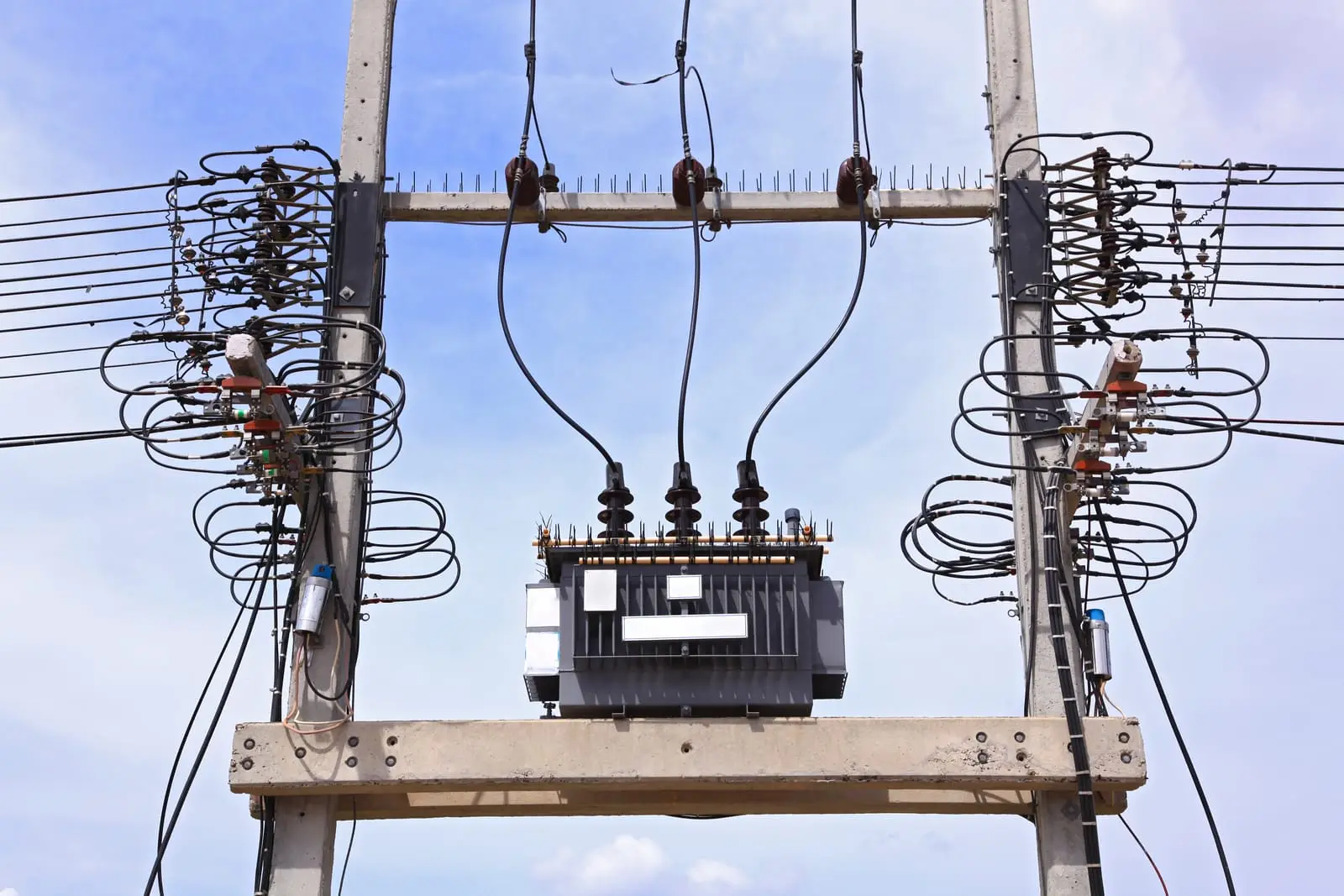
The better defined the leader is, the healthier the system. What do you do if you are not the head of a relationship system that has a weak leader? In Generation to Generation, Friedmann uses two metaphors that are helpful. The first is the transformer, which altars the voltage being transmitted for a specific purpose. A step up transformer increases the voltage, and a step down transformer does the opposite. One use of these transformers is to transmit electricity more efficiently. A step-up transformer converts the electricity at a power plant to high voltage, which reduces energy loss when transmitted over long distances. It then gets to a substation where a step-down transformer reduces it to safer levels to transmit along overhead or underground lines. One more step-down transformer is then used to convert the electricity for household use. These are the gray cans on utility poles or the green boxes by the street. In any relationship system, reactive people are like step-up transformers. Their inability to manage their own anxiety increases anxiety in the system. Conversely, self-differentiated people are able to self-regulate and therefore function as step-down transformers. They are able to pass on information while reducing anxiety in the system.
[00:06:08.260]
The second metaphor is a circuit breaker. Instead of transforming voltage, it cuts off completely to prevent damage. It's a controlled reset. Think of the breaker box in your home or the ground fault interrupter in your bathroom. Likewise, a non-anxious leader can interrupt the transmission of anxiety between one part of the system and another other. In Generation to Generation, Friedmann noted that a key responsibility clergy have is to act as a circuit breaker between congregational anxiety and their family of origin and vice versa. That is, to prevent anxiety from spreading from one relationship system to another through them. In the video, the advice Friedmann gives to people who are leading in an anxious system. That is, leading in a system with a weak leader is to keep your mouth shut with your peers, otherwise you will trigger sabotage. Don't share your excitement about the good stuff happening in your unit. In essence, act as a circuit breaker. But you also have to find a way to stay in touch with the rest of the system without getting caught up in the anxiety of the system. That is, to stay emotionally connected without getting reactive to the rest of the system.
[00:07:24.800]
That's being a step down transformer. This is the ability to transmit information without transmitting anxiety. That is, to self-regulate your own anxiety while staying connected. In this case, you might say to those you lead, Here's what's coming down from the top. It might make things a challenge for us, but we can handle it. Let's stay focused on what we need to do. You may still have to deal with the anxiety created by the rest of the system, but as a leader, you absorb much of it. That is, you step down the anxiety as you're transmitting it. In a similar manner, you would Stay connected to anxious colleagues without trying to calm them down or without agitating them by talking about all the positive things your team is doing. Let your colleagues vent. Stay connected, but don't invite sabotage by sharing the change you are leading. In this way, you are acting as both a circuit breaker and a step-down transformer to protect your team. Finally, Friedmann notes that instead of trying to get the person at the top to change, which will only result in a conflict of wills, share the anxiety of the system with them.
[00:08:32.010]
That is, delegate the anxiety without telling them what to do. In the video, Friedmann gives an example of a vicar general who was like the chief of staff in a Catholic diocese and who was a severe overfunctioner. The bishop in this diocese was a peace monger, so there was a weak leader. Because of this, there were conflicts everywhere in the system, and the vicar general was the one feeling all the stress. He was putting out fires and trying to get the the bishop to take a stand, trying to get the bishop to take responsibility. Friedmann coached the vicar general to do what he called defecting in place. That is, instead of trying to push the bishop to do something, he taught him to delegate the anxiety to him. He taught the vicar general to say something like, Bishop, I wanted to inform you of something. There is a group of anti-abortion women in the diocese who believe that you haven't taken a stand. They are going to pick it outside your house. A countergroup who thinks this group is fascist will also be demonstrating. It's likely to be the lead story on the local news.
[00:09:37.400]
I don't know if you want to bother to do anything about it, but I thought I should inform you. Instead of telling the bishop what to do, the vicar general acted as a step-down transformer and passed on the anxiety in a calm manner without telling the bishop what to do. This not only avoids a conflict of wills, but it shares the pain of the situation without trying to make the bishop responsible. Remember, you can't make another person responsible. When you try this, they will automatically push back. So instead of delegating responsibility, you delegate anxiety. Ideally, the other may feel the pain of the situation and decide to act, but maybe not. Either way, you're not going to get any worse results than if you try to make them responsible, and it might be better. Moreover, you'll take on less of the anxiety and stress of the situation yourself. Listener Ken Brummel shares his own story on this. I'm going to quote directly from his email. My story on the topic, I am frustrated that I run a historic site for my denomination and I cannot get key dates for program in our organization's calendar. Friedmann helped me to have a strategy to fix this.
[00:10:49.800]
You cannot make people accept responsibility, but you can pass them the anxiety of the issue. I have covered this up the past few years by saying to people, There was some miscommunication. When I talk with the leadership of my organization, next, I am following Friedman's advice in this manner. I have sent the dates of my historic site to these leaders. It has not made it into the calendar for laity to see. In the past, I have tried to answer why these dates were not on the calendar. This year, I am admitting I have no idea why. I am simply passing your phone number to the laity that ask. I find Friedman's advice very interesting in being a non-anxious leader, but being under other leaders I did not realize I could pass the anxiety there and action causes me back on them. Well done, Ken Brommel. Finally, in Generation to Generation, Friedmann applies this same principle when you are the leader of a relationship system and you are trying to make followers responsible. Instead of delegating responsibility, delegate anxiety. He gives the example of how a pastor might calmly pass on the financial anxiety in the system.
[00:12:00.880]
A similar phenomenon occurs in work systems where leaders are always trying, usually unsuccessful, to delegate responsibility. A far more effective form of leadership can be to relegate anxiety. I just want you all to know that Our collections have been so low to this point that we probably won't last to the end of the year. It would be my suggestion, therefore, that we establish a committee to see if we can still get a good price for our building and merge with our rival across town. Friedman's point here is that congregants are much more likely to respond to this challenge than if the pastor had said, You need to raise more money. Whether you are the leader in a relationship system or you are leading a part of the system, remaining a non-anxious presence and knowing how and when to delegate anxiety to others in healthy ways is one way you can lead positive change with less of the stress. That's it for episode 340. Remember, you You can connect with me at jack@christian-leaders.com. You can find more resources at thenonanxiousleader. Com. If you have found this episode helpful, please share it with a friend. Please leave a review on your podcast platform of choice and please consider supporting my work. Thanks in advance for your consideration. Until next time. Go be yourself.