
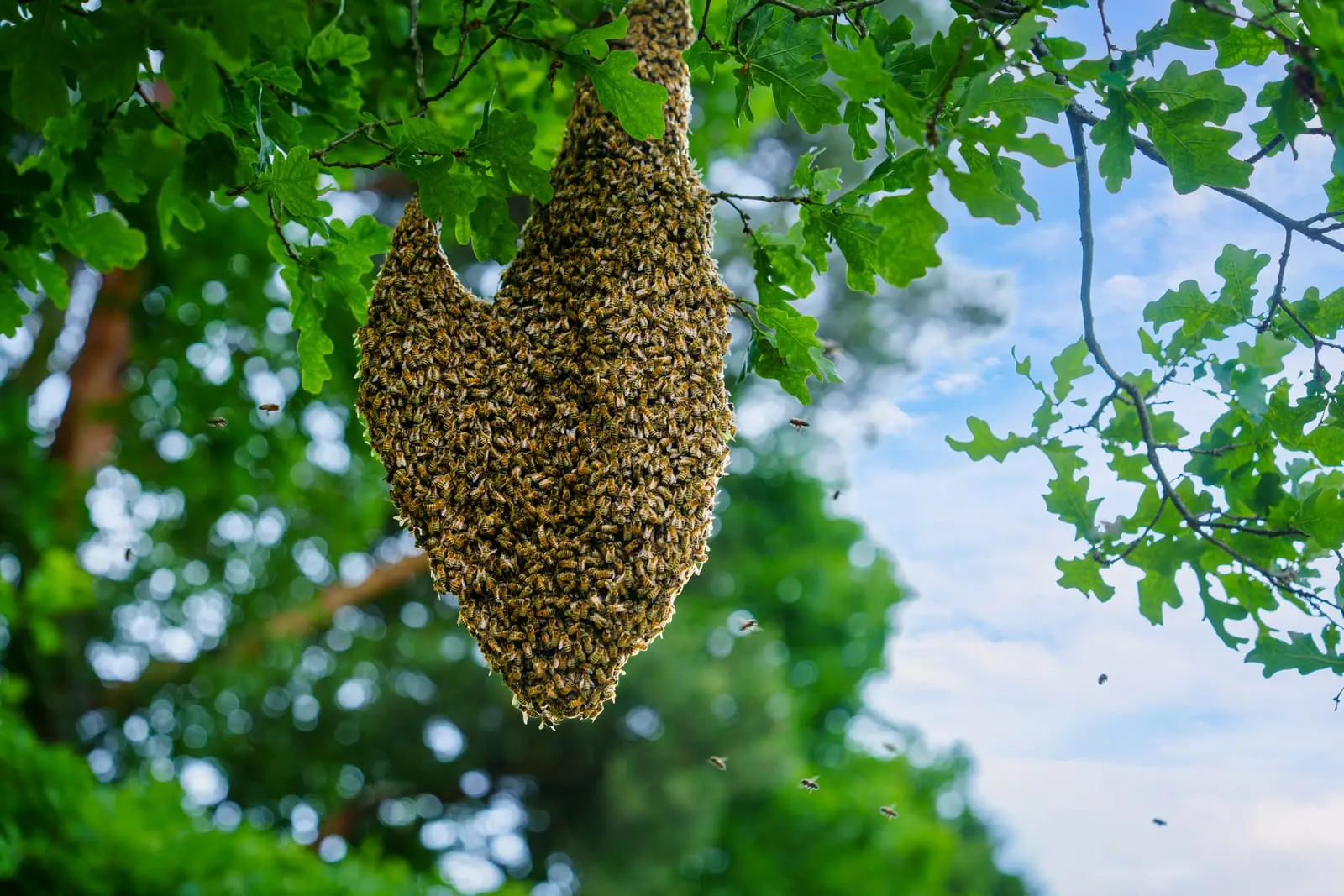
When honeybees outgrow their hive, they need to make a big decision. Here’s how they do it and what we can learn from them.
Show Notes:
Honeybee Decision Making by Thomas D. Seeley
Generation to Generation: Family Process in Church and Synagogue by Edwin Friedman*
Check out The Non-Anxious Life, a FREE AI Family Systems Coach.
Become a Patron for as little as $5/month.
Subscribe to my weekly Two for Tuesday email newsletter.
*This is an affiliate link. I earn a small commission if you make a purchase.
Welcome to Episode 408 of The Non-Anxious Leader podcast. I'm Jack Shitama. If you're new to this podcast, you can connect with me at jack@christian-leaders.com with your questions, comments, and suggestions for future episodes. And you can get more resources at thenonanxiousleader.com where you can find out about my coaching practice, books that I've written, courses that I offer and speaking engagements. You can also subscribe to my Two for Tuesday email newsletter and get your free AI family systems coach at the website or at the links in the show notes.
Finally, if you would like to support my work for as little as $5 a month, you can get more information and sign up at the link in the show notes. Thanks in advance for your consideration. And now, without further ado, Here is episode 408, What Honeybees Can Teach Us About Decision-Making and Leadership.
I recently received a question from Dr. Brian Ivory, who is a member of the Non-Anxious Leader Network leadership team. It's based on a video that shows how honeybees make decisions. I'll post a link to the video in the show notes, and I'll get to the question after I give a summary of the video and my thoughts on the process. When a hive gets too large to accommodate all of its bees, a significant portion of the colony leaves with the original queen to establish a new hive. This isn't necessarily a sign that something has gone wrong; it's a natural process intended to support the survival of both groups.
What's particularly interesting is how the bees select the location for the new hive. Scout bees go out and investigate possible locations. They return and communicate what they've found through their wiggle dances, and just this one part of the video puts me in awe of God's creation and how things work in the natural world. Other bees go out and investigate those locations for themselves, essentially doing their own fact-checking, and then they render their assessment. This process continues until enough bees support a particular location to establish a clear winner.
They reach what is known as a quorum, and then the colony proceeds. Now, there are 3 things I want to highlight about this process. First, the bees appear to be completely objective. There is no emotional process influencing their assessment of the different locations. They're not worried about offending the scout who recommended the particular location.
They aren't forming alliances with bees that agree with them, and they aren't trying to preserve their status or prove that their preferred location is better. They investigate, assess, and communicate their findings. Now, I realize that bees don't have the same capacity for thinking and emotional functioning as human beings, but their process provides an interesting contrast to the way human relationship systems make decisions. Second, the bees are clear about their mission, which is the survival of the colony. They aren't debating whether they should preserve the original hive at all costs or whether some bees deserve a better location than others.
The original hive has become too large and the colony needs to divide in order to survive and flourish. Third, they're clear about their objectives. The new location needs to be dry, protected, and high enough that predators such as bears or raccoons can't easily destroy the hive. These aren't arbitrary preferences; they're requirements that support the mission. So the bees have a clear mission, identifiable objectives, a process for gathering and evaluating information, and a threshold for making a decision.
Once that threshold is reached, they move forward. So here's Brian's question. From a leadership perspective, the research on honeybees sheds light on decision-making models. For example, bees do not rely on the queen to be a quote unquote royal decider. When selecting a relocation spot, bees rely on unbiased aggregation and cross-checking to reach a critical threshold or quorum before proceeding.
Their eventual decision to split off from a hive that has gotten too big is intended toward the survival of both groups. In my lifetime, I have encountered many models of decision-making in leadership: top-down, majority rules, consensus building, the Quaker model, and force field analysis. I am wondering what Bowen would think about these decision-making models. In particular, I wonder which model he would suggest to help avoid or limit post-decision consequences such as splitting, distancing, cutoffs, toxic alliances, etc. I can't think of examples of churches that split primarily because they were getting too big.
I can only think of churches that split into 2 separate groups, but with a great deal of animosity and differences of opinions. So my thinking is that Bowen would probably be agnostic about the particular decision-making model. I don't think he would necessarily favor one over the other. Instead, he would be much more interested in the emotional process surrounding the decision. I believe he would want to know to what extent the people involved are able to think and speak for themselves while remaining emotionally connected to those who disagree with them.
Unlike bees, human beings are emotional creatures. Our opinions are often influenced by our relationships, history, fears, need for approval, and need to be right. We don't always evaluate information objectively. In fact, you could maintain that we seldom evaluate information objectively. Sometimes we support a particular decision because the person proposing it is someone we like.
Other times we oppose an idea because it comes from someone we don't trust or don't like. In understanding the emotional process of decision-making, I think it's helpful to look at Edwin Friedman's— The false dichotomy between charisma and consensus that he details in his book, Generation to Generation: Family Process in Church and Synagogue. In charismatic leadership, the leader determines the direction of the organization. Consensus leadership is what you would think. The system moves forward when everyone agrees.
Both approaches can create problems. With charismatic leadership, the organization becomes overly dependent on the leader. The leader's thinking is the driving force behind decisions. In its extreme, a charismatic leader demands total loyalty. It's their way or the highway.
This is what happens in cults. People may follow because of the leader's personality, authority, or ability to inspire them, but they won't develop their own capacity to think and act independently. With charismatic leadership, the surrounding togetherness pressure is to agree with the leader. Consensus leadership has a different problem. It can create an environment where the group becomes more important than the individual.
People feel pressure to agree even when they have reservations. The desire to maintain harmony can become more important than the willingness to express an honest opinion. Friedman also notes that when you try to lead through consensus, you subject yourself to the tyranny of the minority. If consensus is required to move forward, then a handful of resisters can keep things stuck. In both cases, the emotional process promotes a conflict of wills.
In charismatic leadership, it's between the leader and those who disagree. In consensus leadership, it's between opposing factions. Each can undermine good decision-making. What Friedman offers as an alternative is leadership through self-differentiation. This means that the leader is clear about what they believe, what they stand for, and where they think the relationship system should go, whether that's a family, congregation, or organization.
At the same time, they remain emotionally connected to people who disagree with them. The leader doesn't have to convince everybody to agree, and they don't have to give up their own convictions to maintain relationships. I think this is the most important leadership lesson we can take away from the honeybees. It's not that we should adopt their decision-making process. It's that we should pay attention to the clarity of their mission and objectives and the way they gather and evaluate information without relying on one individual to make the decision.
The first responsibility of leadership is to make sure everybody understands the mission and objectives. Getting clear on goals and values is essential. What are we trying to accomplish? What values guide our decisions? What are the things that matter most as we consider the future of this relationship system?
In addition, it's important that the decision-making authority is clear. The decider might be the leader, the board, church council, or a parent. People need to understand who is responsible for making the decision and what process will be used. Regardless, a leader needs to weigh in on what they believe the mission and objectives should be. Sometimes leaders mistakenly think that a good consensus builder means withholding their own opinions until everybody knows where they stand.
They want to appear to be neutral so they don't influence the process. But according to Friedman, this will increase anxiety in the system because people want to know where the leader stands. A key role of the leader is to say, here's what I believe, here's why I think this decision is important, and here's what I think we should do. Then they need to allow other people to have their own opinions. They need to be willing to listen, consider different perspectives, and even change their minds when appropriate, but they shouldn't allow the anxiety of others to determine what they believe.
This is the balance between being clear about who you are and remaining connected to others. And this is where I think we can learn something else from the honeybees. The bees don't need everybody to agree about every detail. They don't need to establish that the scouts who favored the losing locations were wrong or that their opinions were somehow disloyal to the colony. They simply need enough information and enough support to move forward.
We humans have a much harder time with this. We often interpret disagreement as a personal rejection. If someone disagrees with our proposal, we may conclude that they don't respect us or support our leadership. Or if we disagree with the decision, we may begin to question the motives and character of the people who made it. Once that happens, the original issue becomes secondary.
The emotional process takes over. We start forming alliances. We talk to people who agree with us. We complain about those who disagree. We may even recruit others to help us make our case.
Before long, we're no longer simply discussing a decision. We're dealing with triangles, polarization, And increasing anxiety throughout the relationship system. This is how a congregation can end up splitting over something that might initially have been a fairly ordinary disagreement. I remember a pastor telling the story of a congregation that nearly split over whether the family that had volunteered to clean the church should have to provide the toilet paper. Clearly, something else was going on.
It's process, Not content. And as Brian noted, the bees' division is because the colony gets too large. It's not over some kind of disagreement. Splits or cutoffs are different, whether it's a family, congregation, or organization. People leave because relationships have become so strained that they no longer believe they can remain together.
Sometimes they leave with considerable animosity toward those who stay. In church splits, they may even establish a new congregation around the very conflict that caused them to leave. From a family systems perspective, separating doesn't necessarily resolve the emotional process. People can carry their unresolved anxiety, patterns of polarization, and relationship difficulties with them. The emotional process question is, can we disagree without a conflict of wills or a cutoff?
A great example of this is a church that a friend of mine pastored that was thinking about creating a sanctuary for an undocumented family. They had plans to put in a place that they could sleep and shower and bathe, and that they could stay there without fearing being taken by immigration authorities. They held town hall type meetings where people could ask questions and express their opinions. And then they voted to see whether or not they would move forward with this. The vote was 52 to 48 against moving forward.
And then the congregation moved on. There was no split or schism. There was no animosity. People had been able to share their opinions. They voted, and that was it.
You might say they acted like honeybees, which brings us back to the question about decision-making models. What matters is whether the people involved can function in a self-differentiated way. Can they think for themselves? Can they express their convictions without needing everybody else to agree? Can they listen to people who have different opinions without becoming defensive or withdrawing?
And can they remain connected after a decision has been made, even when they don't particularly like the outcome? The leader has a crucial role in making this possible. They need to be clear about the mission and objectives. They need to understand the decision-making authority and the process. They need to state their own convictions and invite others to do the same.
And most importantly, they need to model the kind of emotional functioning they hope to see throughout the relationship system. The leader can't guarantee that people will agree, that there won't be conflict, and that nobody will leave, but they can make a significant difference by managing their own anxiety, Refusing to participate in toxic alliances and staying connected to the people who disagree with them. To me, that's the most important lesson from the honeybees for human leadership. They demonstrate a clear mission, clear objectives, and a process for gathering and evaluating information. We need those same things, but we also need something the bees don't have to worry about, the ability to manage the emotional process that surrounds our decisions.
In family systems terms, the goal of leadership isn't to find a decision-making model that eliminates disagreement or guarantees that everybody will remain together. It's to foster an environment in which people can think independently, speak honestly, and remain connected even when they disagree. That's leadership through self-differentiation.
That's it for episode 408. Remember, you can connect with me at jack@christian-leaders.com, and you can find more resources at thenonanxiousleader.com. And if you found this episode helpful, please share it with someone who would benefit, and please leave a review on your podcast platform of choice. Thanks in advance for your help. Until next time, go be yourself.