
Jon Miller and Drew Keller have identified six ways leaders respond to stress. This episode unpacks this from a family systems perspective so you can grow as a non-anxious leader.
Show Notes:
6 Ways Leaders Harness Stress by Jon Miller and Drew Keller and the PDF version.
Take The Test | Center for Stress Intelligence
Check out The Non-Anxious Life, a FREE AI Family Systems Coach.
Become a Patron for as little as $5/month.
Subscribe to my weekly Two for Tuesday email newsletter.
[00:00:34.310]
Welcome to Episode 391 of The Non-Anxious Leader podcast. I'm Jack Shitama. If you're new to this podcast, you can connect with me at jack@christian-leaders.com with your questions, comments, and suggestions for future episodes. And you can get more resources at thenonanxiousleader.com where you can find out about my coaching practice, speaking engagements, booklets, books that I've written, and courses that I offer. You can also subscribe to my Two for Tuesday email newsletter and get your free AI family systems coach at the website or at the links in the show notes.
[00:01:10.690]
Finally, if you'd like to support my work for as little as $5 a month, you can get more information and sign up at the link in the show notes. Thanks in advance for your consideration. And now without further ado, here is episode 391, 6 Responses to Stress and How to Make Them Work for You.
[00:01:33.530]
The idea for this episode came from a Harvard Business Review article, Six Ways Leaders Harness Stress, by John Miller and Drew Keller. I'll put a link to a gift article as well as a PDF in the show notes. Miller and Keller established the Center for Stress Intelligence, which studies how leaders can make better decisions under pressure. Stress reveals the emotional process in a system. It exposes how people habitually manage themselves, how they interpret threat, and how they regulate intensity.
[00:02:08.160]
What looks like leadership style on the surface is often just a patterned response to anxiety in the system. And when pressure rises, those patterns become more predictable. The HBR article identifies 6 default stress response types. Lighthouse, Alchemist, Firefighter, Stoic, Diplomat, and Container. Each one is a way of managing the tension between threat and opportunity, between composure and action.
[00:02:37.270]
From a family systems perspective, these aren't personality types. They're automatic responses shaped by anxiety, early life patterns, and the emotional field leaders inhabit. They're functional adaptations at work until they don't. The article has a link to take a free assessment to see which of the 6 types you are. As I work through these response types from a family systems perspective, I'm going to call them patterns as I think it better reflects how automatic responses function.
[00:03:08.690]
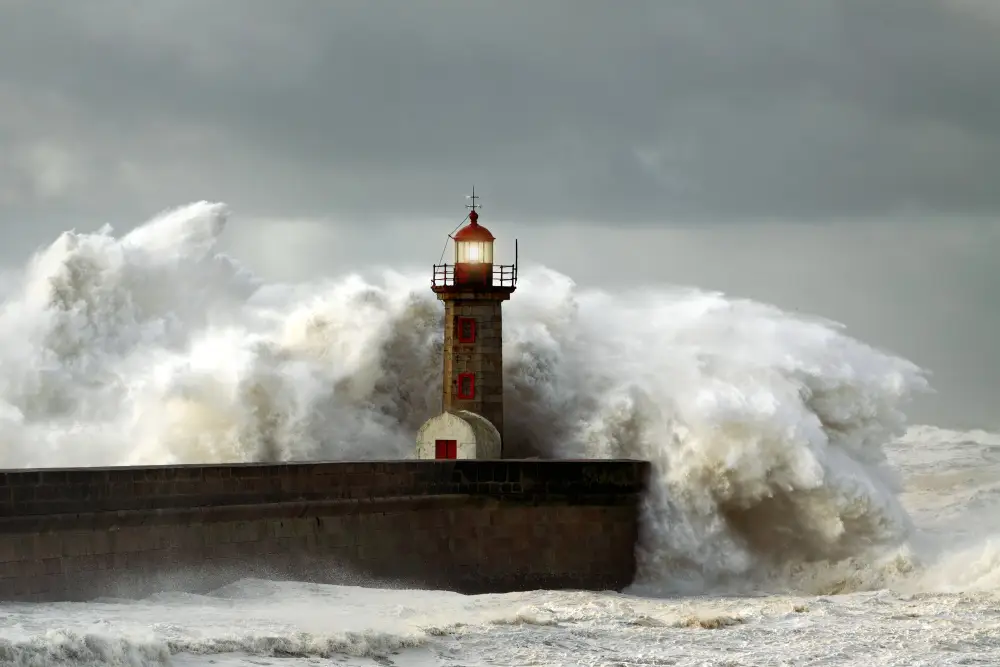
The first pattern is the Lighthouse. Lighthouse leaders project calm when others are rattled. They regulate their breathing, lower their voices, and keep their eyes on the horizon rather than the crisis immediately in front of them. The article notes that, quote, "Stress triggers their orientation towards stability over speed," end quote, and their steadiness can create psychological safety. The lighthouse is a differentiated stance of stillness.
[00:03:38.150]
It's the leader who refuses to be swept into the reactivity of the moment. But even this has a downside. Calm can look like distance. Silence can look like indecision, and the drive for stability can harden into inertia. One executive said, quote, I thought my job was to be the calm center, but my team later told me it felt like I wasn't letting them in, end quote.
[00:04:02.210]
The family systems approach here is self-definition to provide clarity while staying emotionally connected. Calm is useful only when people understand what it means. A lighthouse leader has to name their intent. I'm staying calm so we can think clearly, and then stay connected enough to let others into the process. Self-differentiation is self-definition and emotional connection.
[00:04:28.500]
The second pattern is the Alchemist. Alchemists see pressure as a catalyst for growth. They treat turbulence as raw material for reinvention. Outwardly, they're steady, but inwardly, they're kinetic. They connect dots others don't see.
[00:04:43.170]
They hear, "The playbook doesn't work anymore," and they respond, "Great, then we get to write a new one." This approach uses imaginative reframing. Stress becomes information. Disruption becomes possibility. But under prolonged uncertainty, creativity can turn into chaos. The article describes a CEO who launched sweeping reforms after a whistleblower scandal.
[00:05:08.550]
Changes that were externally praised but internally destabilizing. The risk is that reinvention becomes constant motion, and constant motion creates chronic anxiety. The alchemist's challenge is to anchor creativity to purpose, to have a North Star, a clear problem definition. Without vision, the people perish. In family systems terms, this is clearly defining where you believe God is leading.
[00:05:36.530]
If you don't, it feels like chaos. The third pattern is the firefighter. Firefighters thrive on pressure and momentum. They move fast, radiate urgency, and mobilize others. They convert stress into action.
[00:05:53.340]
The article notes that pressure doesn't paralyze them, it ignites them. Firefighters respond with decisive intervention. When the field is flooded with anxiety, action can break the spell. But the downside is impulsive action. Every spark looks like a blaze.
[00:06:10.170]
Priorities shift weekly. Burnout spikes. One COO said, quote, you feel most alive when you're fighting fires, but you have to be careful you don't start fanning the flames, end quote. The firefighter's work is to pause long enough to regulate their own nervous system, to involve others early so the cognitive load is shared, and to reflect after the urgency passes. It's slowing down enough to see the pattern rather than just the flame.
[00:06:41.080]
The fourth pattern is the stoic. Stoics lead through discipline and self-control. They anchor themselves in principles and reason. They slow down, regulate their emotions, and reintroduce order. The article says that they, quote, perceive stress as a threat and look inward, tightening focus and minimizing emotional reactions, end quote.
[00:07:04.050]
The stoic responds with principled restraint. They preserve coherence when others spiral, but the downside is emotional withdrawal, treating emotion as a distraction, retreating into data and process. It not only can create anxiety due to a lack of emotional connection, it can take its toll on the leader. The article notes that unexpressed stress can lead to insomnia, fatigue, or quiet burnout. The Stoic's work is to stay connected while staying steady, to name the emotional climate without being consumed by it, and to voice shared difficulty in a way that strengthens trust.
[00:07:42.430]
This allows emotion to inform without overwhelming. The fifth pattern is The Diplomat. Diplomats ease tension through dialogue. They defuse conflict, sustain trust, and read interpersonal signals with precision. They respond to stress in a way that's composed but relationally dynamic.
[00:08:03.710]
The article notes that they "sense tension before it surfaces and soften it by enabling relational regulation." Diplomats maintain connection under strain. They keep the emotional field from fracturing. But the downside is over-accommodation—consensus over candor. Smoothing over conflict rather than addressing it. One executive admitted, "Sometimes I'd rather have a slightly wrong decision everyone supports than the right one that divides the team." The diplomat's work is to surface tension rather than to absorb it, to name discomfort plainly, and to say what they believe while giving others the freedom to disagree.
[00:08:47.870]
This is hard for the diplomat because their focus on togetherness can create hurting. Modeling self-differentiation helps avoid this. The sixth and final pattern is the Container. Containers lead with control. They impose structure, hold the system together, and convert ambiguity into clear priorities.
[00:09:08.350]
They rely on tight inner circles and disciplined execution. The article captures their mindset with phrases like "strong and steady" and "you can't outrun a storm." Containers respond to stress with a need for certainty. When anxiety spikes, containers create order. But the downside is overcontrol, narrowing the lens, and excluding voices. They absorb too much pressure too quietly.
[00:09:36.120]
The article describes a ransomware crisis where the CEO's tight control prevented confusion but left parts of the organization anxious and disoriented. The challenge for the container is to widen the lens regularly, to release pressure deliberately, and to model resilience rather than invulnerability. In family systems terms, this is distributing responsibility rather than centralizing it. These are the 6 stress response types or patterns that Miller and Keller have identified, and the question is, what do you do with it?
[00:10:15.050]
Across all 6 patterns, the family systems insight is that stress responses are predictable emotional processes. They're shaped by how leaders interpret threat, how they regulate themselves, and how they manage emotional connection. Miller and Keller write, quote, crises rarely announce themselves with clarity. Stress response patterns shape what leaders notice, how quickly they move, and where their blind spots may lie. End quote.
[00:10:44.050]
Family systems theory helps us to understand that these patterns are not fixed traits. They're automatic responses to rising anxiety, and leaders can learn to be more versatile in responding to stress. The authors recommend 3 things you can do: expand your range, test and adjust in real time, and develop flexibility. From a family systems perspective, these are all forms of self-differentiation. It's the ability to stay connected while staying clear, to act without being reactive, and to shift patterns rather than being trapped by them.
[00:11:22.480]
Expanding your range requires being intentional in the moment to respond differently. Ask yourself, what response would be most helpful in this moment? I took the assessment and I happen to be a lighthouse, but if I pause and ask that question, I might decide that being a firefighter is more important in that moment. The goal isn't to become someone else, it's to widen the repertoire so the system doesn't dictate how you respond. The authors also suggest asking, is this response reducing or amplifying confusion?
[00:11:59.300]
What is my team experiencing from me? In both family systems theory and emotional intelligence terms, this is observing the emotional field rather than reacting to it. This type of reflection and self-awareness is essential in a crisis. Developing flexibility is the heart of self-differentiation. It's the ability to shift from calm to action, from creativity to structure, from self-definition to emotional connection, depending on what the system needs.
[00:12:31.180]
As Miller and Keller write, "Leading well under pressure is less about holding firm to one's style and more about knowing when to shift." And finally, sharing the cognitive load is a systems principle. No leader carries stress alone. Edwin Friedman emphasized that sharing anxiety in a healthy way helps everyone function better. This means doing it as a non-anxious leader. When a leader says, "I'm concerned about how we're going to respond.
[00:13:01.830]
I'd like for us to work through this together," they are sharing their anxiety in a way that encourages others to take responsibility for self. Stress isn't the enemy. Crisis isn't the enemy. Chronic anxiety is. Stress actually can help us sharpen our focus, whereas chronic anxiety narrows perspective.
[00:13:22.630]
Stress can ignite creativity, Chronic anxiety fuels reactivity. Stress can mobilize action. Chronic anxiety erodes the ability to think clearly. Leaders who harness stress well are not calm all the time, creative all the time, decisive all the time, or relational all the time. They are self-differentiated enough to choose their response rather than be driven by it.
[00:13:48.660]
They understand their default pattern, they see its strengths and weaknesses, and they expand their range so the system doesn't shrink their options. In the end, stress reveals a leader's relationship to self, others, and to the system. And the leaders who are able to perform best under pressure don't just stay connected, clear, and flexible. They use stress as a sign that intentionality is more important than ever.
[00:14:17.580]
That's it for episode 391. Remember, you can connect with me at jack@christian-leaders.com. And find more resources at thenonanxiousleader.com. And if you found this episode helpful, please share it with someone who would benefit and please leave a review on your podcast platform of choice. Thanks in advance for your help.
[00:14:39.630]
Until next time, go be yourself.