
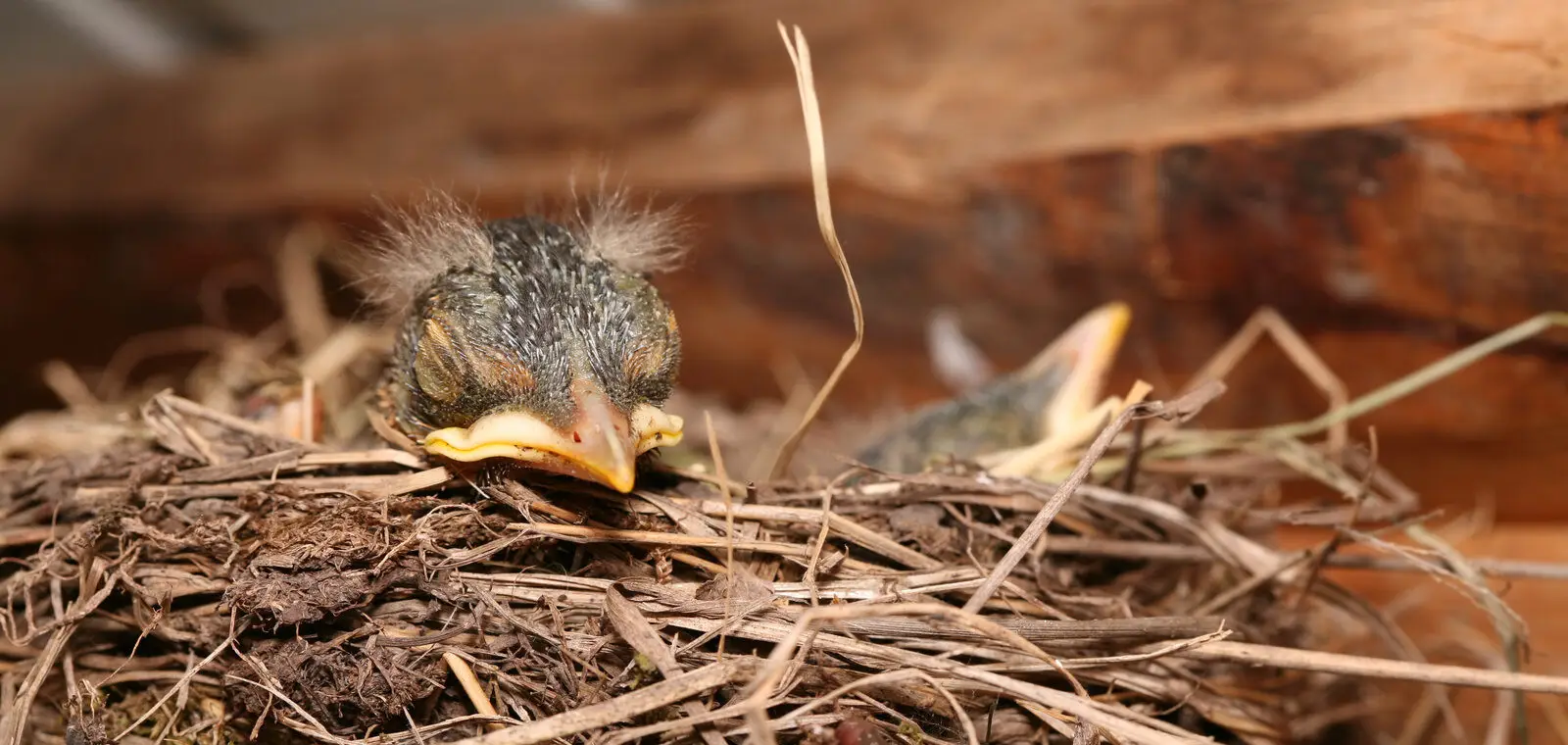
When we make our well-being dependent on someone else’s functioning we set up a conflict of wills. “Soaring” from Friedman’s Fables can help us understand why.
Show Notes:
Check out The Non-Anxious Life, a FREE AI Family Systems Coach.
Become a Patron for as little as $5/month.
Subscribe to my weekly Two for Tuesday email newsletter.
[00:00:33.850]
Welcome to Episode 379 of The Non Anxious Leader Podcast. I'm Jack Shitama. I am returning from vacation the day this episode drops. I will be back next week with an all new episode. Today's episode is one of my favorites from Friedman's Fables, so I hope you like it. If you're new to this podcast, you can connect with me at jackristian-leaders.com with your questions, comments and suggestions for future episodes. And you can get more resources at thenonanxiousleader.com where you can find out about my coaching practice, speaking engagements, the books that I've written, and the courses and resources that I offer. You can also subscribe to my Two for Tuesday email newsletter as well as get your free AI Family Systems Coach at the website or at the link in the Show Notes. Finally, if you'd like to support my work for as little as $5 a month, you can get more information at the link in the Show Notes. Thanks in advance for your consideration. And now, without further ado, Here is episode 379 a rebroadcast of story Time Recognizing a conflict of wills. Today's story is soaring from Friedman's Fables.
[00:01:57.720]
If you don't have a copy of the book, you should get it. Mr. And Mrs. Bird had successfully launched nine fledglings. Each had been hatched with no problems and grown to pre flight performance with few complications. At the moment of pushout, each had eagerly walked out on the ledge of the tree hole in which their nest had been sheltered and as their parents helped them clear the rim, spontaneously fluttered its wings in the most natural way. None seemed to need any special tutoring or coaching. All jumped out without any stalling whatsoever, fell a little, flapped a little, dipped, and flew. Now Mr. And Mrs. Bird were ready to leave the nest themselves, and it had been their home a long time. Both were eager to spend the remaining years alone together, satisfied that they had contributed to the survival and the evolution of their species as they had done nine times before. Therefore, they led Baby Bird to the entrance of their shelter and without too much thought about it or concern, they gently pushed him out. Baby Bird at first fell a few feet, just like his siblings before him, and then just kept on falling in fact, he went into an immediate nose dive, tail to the sky.
[00:03:14.080]
The birds were alarmed. Mr. Bird could not believe what he was seeing. Flap your wings. Cried Mrs. Bird. Pick your head up. Shouted Mr. Bird. Fly, fly. They both echoed. But Baby Bird, nose to the ground, did not move a muscle. Nor did he seem to show fear. He did not call back, but just kept repeating to himself, I'll be damned if I'm going to flap my wings just cause they want me to. Further and further, his little body plummeted straight down like some plumb line following a lead weight. Loosen your feathers. Cried his mother. Watch out. Screamed his father frantically. They looked at each other then, as though they both had the same idea at once. Each swooped down on their offspring from opposite sides and caught him before he was halfway down. They gently landed, regained their strength and flew him back to the nest, chirping soothing noises all the way. There, there. Don't be scared, or next time it will be easier. Or you just have to get some confidence or we'll try again. Tomorrow will be better. But Baby Bird did not respond. He just kept thinking to himself, even more determinedly than before, I'll be damned if I'm going to flap my wings just because they want me to.
[00:04:30.090]
The next morning, Mama and Papa Bird tried again. This time a bit more anxious as a result of the previous day's experience. They went out of their way to comfort. Baby Bird pointed out that it would be all right once he learned and tried to raise his confidence by explaining how easily his brothers and sisters had done it before him. Mrs. Bird explained how to glide if he became tired, and Mr. Bird showed him how to flex his muscles more trimly. Then, carefully, they set him on the rim of the hole again, and after a moment's hesitation, pushed. Baby Bird went into a tumble. Fly. Cried Mrs. Bird with far more anxiety than before. Move your wings. Her mate followed. Your wings. Your wings. But nothing his parents said had any effect on his attitude whatsoever. He just kept plummeting and thinking, I'll be damned if I'm going to flap my wings just because they want me to. So once again, Mr. And Mrs. Bird zoomed down from their perch, gently nestled themselves beneath his fall, decelerated slowly to the ground, and after a brief rest, carried him back to the nest once more. The next day it was the same, and the day after that the same again.
[00:05:42.460]
Days became weeks, and weeks became months. Soon the cold weather was approaching, and likewise, the winter of their lives. Mama and Papa Bird were totally perplexed. What was Wrong. They had never had any trouble with their previous children. What made matters worse was Baby Bird's refusal to help himself. He would not explain, refuse to show any gratitude, and if anything, became more belligerent in proportion to their concern. The situation was even beginning to affect their own relationship. More than ever before, they found that if chirping at Baby Bird did not help, the resulting frustration found them chirping at each other. Then one morning, Baby Bird awoke. He heard nothing. Usually he could hear his parents somewhere, even if it was only the ruffling of their feathers. In fact, that is generally what woke him up. Normally, if he slept long enough, he could count on one of them rushing in angrily, or the opposite, coaxing him out with a rewarding morsel. But this morning there was a peaceful, silent isolation. He tried to outwait them as usual, but nothing happened. Finally, he got himself off his straw and went out of his cubicle. He chirped.
[00:06:56.550]
There was no response. They have gone out together. Most unusual, he said. He walked to the edge of the opening to see if he could find them outside. It was a particularly beautiful day and the sky was seductively calling him. He repressed the urge quickly, however, and ducked back in. They were nowhere to be seen. He decided to go back to bed and wait. But he could not sleep. He found himself anxious, fidgety. In the past, he had always found his parents chirping a bother. He almost longed for it now. Somehow, those chirps and pokes had enabled him to avoid his destiny instead of facing it. He was beginning to realize that as much as he was annoyed by their calls, they managed to, in some way HE could not comprehend, to take the discomfort out of his indolence. He became angry. How dare they? Don't they understand that I can't make it alone? Don't they care? Finally he said, I'll show them. He went to the opening again. The ground was far away. Mama and Papa Bird had always made sure to put their nest high in a tree where it would be so much more secure.
[00:08:06.000]
He peered out over the edge of the hole in the bark. A trickle of fear ran through his otherwise cold blooded body. But he quickly stopped it, as he always did with rage. All the better. They'll never know what happened. And if they do find out, maybe even come to see what's left, then they'll know. Really know. He resisted an urge to look around and dove out. He began tumbling as before, end over end, and he felt some loss of control. Then he stopped tumbling and angled straight for the Earth below. He had hopes for a rapid descent and began to brace himself eagerly for the triumphal splat. When he was a little more than halfway down, however further down than he had ever fallen before, something else uncontrollable happened. Both of his wings simultaneously and, through no fault of his, pulled away from his body. He tried to tuck them back in, but air resistance prevented it. Worse, they proceeded slowly to span out further on both sides until they were fully extended. The immediate effect, of course, was to pull Baby Bird out of his nosedive. More, however, occurred than that. As his body gradually inclined upwards, his whole being felt an urge he had never sensed before.
[00:09:21.600]
Caught in the flow of a gentle air current, he rose rapidly higher toward the clouds, and for perhaps only the second time in his life, he. He looked at the sky. The current carried him gracefully in a soft, elongated parabolic curve, which, after it had borne him to its zenith, began to descend. And inadvertently again, as if through no fault of his, he unwittingly, perhaps one could say, instinctively raised and lowered his wings. Instantly, his body stopped its short descent and he glided upwards again. He lowered and raised his wings once more. And once more his young, properly formed body moved effortlessly up in a graceful inverted arc. The feeling was new, indescribably new. His parents totally forgotten for the moment and without their constant chirping to foul his functioning, he found, to his surprise, that he was able, almost naturally, to maintain the minimum velocity needed to prevent stalls. He experimented more. Within no time at all, Little Bird was miles away. Looking around below, he could no longer locate his former home. There were trees everywhere. For a moment, he wondered which had been his. Then, with sudden resolve, he flapped his wings again and again, spurting and gliding upward.
[00:10:42.070]
Out he went in new directions, diving, looping, turning, making one more time, he remembered his nest, but with no vestige of his previous attitude. Oblivious, he soared to the sun. And the moral of the story is the children who do best in this world are those we make least important to our own salvation. This is my favorite fable in Friedman's fables. And there is so much to unpack here. So let's start with the moral itself. The children who do best in this world are those we make least important to our own salvation. What we can see here with Mama and Papa Bird is they wanted to move on. It was time for them to go on and get on with their lives, to get Baby Bird out of the nest and become quote, unquote, empty nesters. The problem was, was that Baby Bird could sense this. That his flying was actually going to help define their future for them. And when we make our future dependent on somebody else's functioning, they can actually sense that, and it creates a conflict of wills. Anytime a parent says, you've embarrassed me, or when a parent says that the family is depending on you, these naturally create situations which promote a conflict of wills.
[00:12:12.310]
Nobody wants to be told what to do, especially when what they want us to do is going to benefit them more than us. Now we know that Baby Bird would benefit because he's going to learn to fly and he's going to grow up. But the problem in a conflict of wills like this is that people are going to sense that it's more about us than them if we make our happiness and our self definition dependent on their functioning. So it's really important to recognize that when we are putting demands on other people that help us define ourselves, help us to make our lives better, then we are creating a conflict of wills. Because people will normally push back against that. Now, if they don't push back against that, that doesn't mean that everything's hunky dory. What it means is that they are usually adapting and that will somehow somewhere come to pay the piper in dysfunctional behavior. A second thing to recognize here is that a conflict of wills is often created when we try to make another person responsible. And we know from family systems theory that we can't make another person responsible. By trying to make them responsible, we actually take their responsibility away.
[00:13:29.630]
And think about how Mama and Papa Bird swooped down to save Baby Bird when their own anxiety could not let him figure it out himself. This leads to the third point, which is when our own anxiety causes us to be either reactive or adaptive, then that makes the situation even worse. In this case, Mama and Papa Bird were reactive when they would chirp at him, telling him to get out of bed, you need to get out of bed. And that just enabled him to be angry and to avoid responsibility for self. Or they coaxed him and soothed him and over functioned by giving him tasty morsels to try to get him to do what he had to do. In either case, neither thing was helping Baby Bird to take responsibility for self. The only way that he was going to take responsibility for self is if they backed off and gave him the freedom to make his own choices. The next point I think this story illustrates is that when our own anxiety gets us into these conflicts of wills, it results in triangles because we are not able to deal with the situation in the way that we should.
[00:14:46.170]
Mama and Papa Bird's responsibility was to allow Baby Bird to figure it out for himself, to push him out of the nest and let him go. But they couldn't do that. And, and the more anxious they got, the more they actually chirped at each other. And that becomes a triangle to avoid the discomfort they are having with Baby Bird. Each of them is uncomfortable with Baby Bird not being responsible. And so they start chirping at each other, they start fighting with each other. And that is a classic triangle in a family of origin. When a child is not able to function effectively because of the anxiety of the parents. And that goes to what family systems theory calls a child focused family, which makes it difficult for the child to function in healthy ways because the parents put too much intense focus on the child. That can be a whole other episode. Maybe I'll do that at some point in time, but that's what is going on here. And it ends up creating a triangle between the child and the two parents who end up fighting with each other because they can't deal with their own child.
[00:15:52.050]
And of course the end of the story comes when mama and Papa Bird finally get fed up. And being fed up is a gift. At some point when you say, I am not going to deal with it anymore, I'm going to give the other person responsibility for themselves and you can do it in a healthy way, then they are forced to deal with it and that creates anxiety in the other. What happens here is Mama and Papa Bird finally get fed up and they say, well, we're just gonna leave. They don't even say goodbye. And Baby Bird gets up and with mama and Papa Bird not being reactive or adaptive, not chirping at him or coaxing him, he starts to feel anxious, he starts to feel uncomfortable and he goes to sabotage, he's going to sabotage the whole thing by diving out of the nest and showing them what's what. But of course nature takes over and he starts to fly. And this is a great metaphor for what happens when we actually are able to be a non anxious presence and give people responsibility for self. Now there's a little breakdown here because they are not actually present, they leave and they force Baby Bird to be responsible for self.
[00:17:05.720]
But when we can be a non anxious presence and stop chirping at people, stop over functioning for people, stop tell them what we believe, but give them the freedom to choose for themselves, then they have to deal with their own anxiety. And that is what non anxious leaders do. Non anxious leaders can tell people what to do. But they don't. They give them the freedom to choose. They say this is what I think we ought to be doing, I hope you agree. And they don't force them. They don't get into the conflict of wills. This is a hard thing to do because we feel like we need to be leading by telling people what to do, but we need to be leading by saying what we believe is right and then giving people the freedom to choose. Sometimes people will rebel, sometimes people will dysfunction. And that's when we really need to remain our most non anxious presence. And if we can do that like Baby Bird, they will then have to deal with their own anxiety and and they're either going to figure it out or they're going to leave. That's been my experience as a non anxious leader.
[00:18:11.550]
So the key takeaway here today is to recognize how to avoid getting into a conflict of wills so that we give people the freedom to make the right choice themselves. In this case it was Baby Bird diving out of the nest and learning to fly. Whatever it is, it and your family of origin and your congregation in your organization. If you can lead as a non anxious presence and if you can be that person who gives people the freedom to make the right choice, you will give your team, you will give your family, you will give the mission of your organization the best chance to thrive. That's it for episode 379. I will be back next week with an all new episode. Remember, you can connect with me at jackristian-leaders.com and you can find more resources at thenonanxiousleader.com and if you found this episode helpful, please share it with someone who would benefit. And please leave a review on your podcast platform of choice. Thanks in advance for your help. Until next time, go be yourself.