
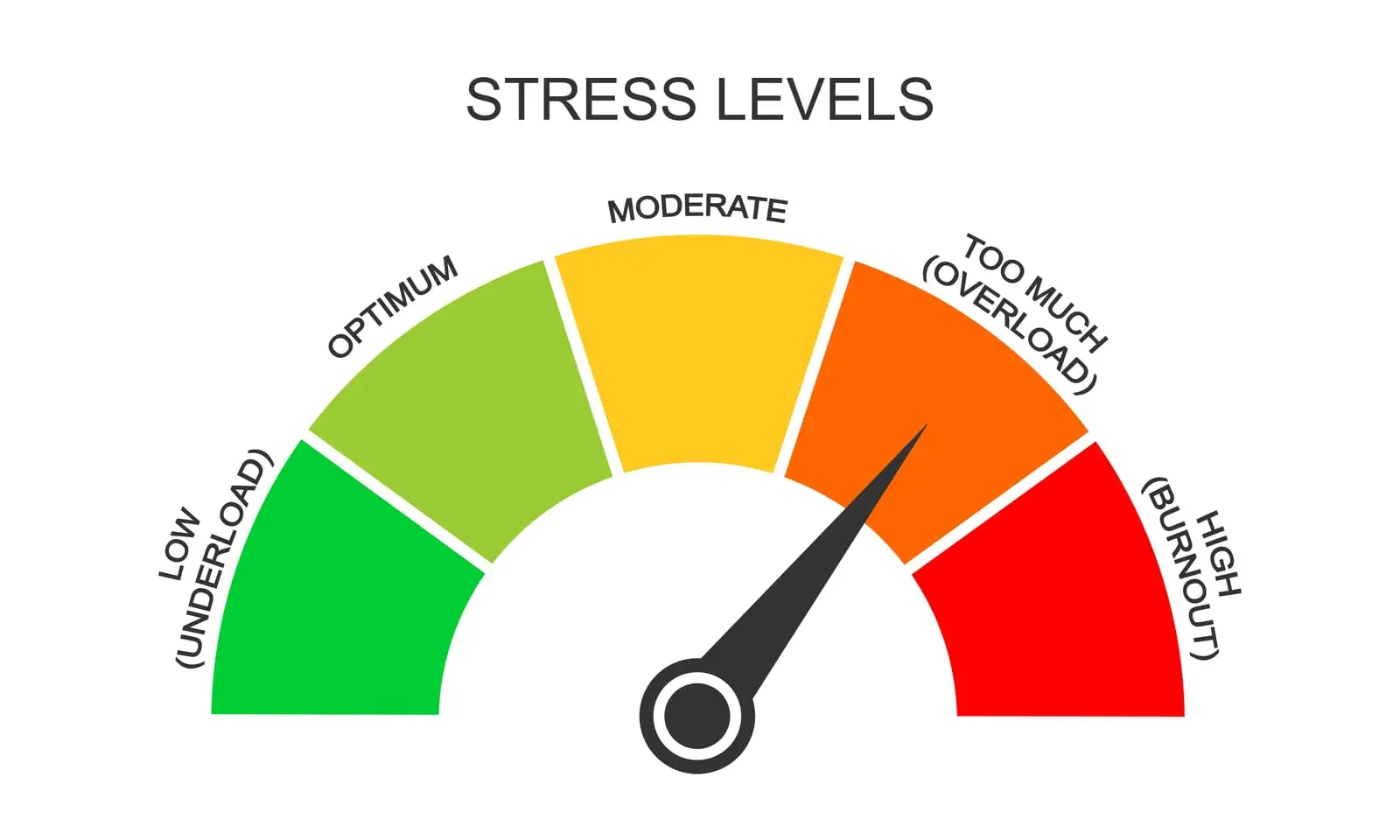
When relationship systems are stressed they get anxious. Here’s what that looks like and what you can do as a non-anxious leader.
Show Notes:
When the Family Tightens Up – by Kathleen Smith
Become a Patron for as little as $5/month.
Subscribe to my weekly Two for Tuesday email newsletter.
Welcome to Episode 370 of The Non-Anxious Leader Podcast. I'm Jack Shitama. Before we get into today's episode, I want to let you know that in a few weeks, I have an exciting announcement about a free tool that can help you lead as a non-anxious presence, personally and professionally. I am really excited about this. We've been testing it out, and I'm looking forward to making it available to you. If If you're new to this podcast, you can connect with me at jack@christian-leaders.com with your questions, comments, and suggestions for future episodes. You can get more resources at thenonanxiousleader.com, where you can find out about the courses I offer the books I've written, my speaking engagements, and my coaching practice. You can also subscribe to my 2 for Tuesday email newsletter at the website or at the link in the show notes. Finally, if you'd like to support my work for as As little as $5 a month, you can do so at the link in the show notes.
Thanks in advance for your consideration. Now, without further ado, here is episode 370, Five Ways to Respond to System Anxiety. The idea for this episode comes from Kathleen Smith's Substack Post, When the Family Titans Up, which looks at how groups behave under stress. She writes, Living systems have to adapt to manage stress. Herds, tighten. Locust, sworn. People get salty in the group chat. It's a reminder that tightening is normal. When anxiety rises, groups instinctively move towards self-protection. Whether you're leading a family, a congregation, or an organization, you've probably seen this happen. Today, we'll look at what tightening looks like, why it happens, and how a leader can respond with clarity instead of reactivity. When a system is stressed, Smith notes that it becomes more rigid, more reactive, and more sensitive to differences. For families, the stress could be the death of a loved one, financial insecurity, or a major move or job change. In leadership settings, it can be an external threat, a decline in attendance or giving, or a change in leadership itself. Whether personal or vocational, the possible stressors are numerous. The idea of tightening is that system anxiety increases and its ability to respond to challenge decreases.
For congregations or organizations, this often shows up as more rules, policies, and bureaucracy, less tolerance for experimentation, more triangling and behind-the-scenes conversations, more worry about approval and belonging, and more pressure to conform to how we've always done it. None of this is personal. It's the system system trying to stabilize itself. But leaders often misinterpret tightening as resistance or disrespect. That's when reactivity spikes and leadership effectiveness drops. Family systems theory gives us a different lens. The system is anxious, not broken. Reminding yourself, this isn't about me, this is about the system managing stress, increases what Edmund Friedmann calls looseness. This is the opposite of tightening and increases your freedom to choose a thoughtful response. Smith describes three predictable responses people fall into when a system tightens. All three are forms of reactivity. The first is going along. This is adaptivity, or as Bill Selby says, adaptive reactivity. Adaptivity is still a form of reactivity. When you go along, you over function, you appease, you smooth things over, you try to keep the peace by absorbing the anxiety of the group. When you do this, you are not only helping the system remain stuck, you will bear the stress of the system.
It's a recipe for burnout. The second response to system tightening, to system anxiety is distancing. This is when you withdraw, avoid conflict, and become less available. It feels like self-protection, but it increases anxiety in the system. It's a natural response. After all, who wants to deal with the most anxious and resistant? Yet when you do this, it will increase system anxiety and reactivity. The third response to system anxiety or tightening is criticizing. You push back, you vent, you blame. It might feel better or give you a sense of control, but this is reactivity at its worst. It will not only increase anxiety in the system, it will result in a conflict of wills which will keep you stuck. What's the leadership alternative? According to Smith, it's predicting the system. She writes, Being less surprised can dial down your own reactivity so you can choose how you want to engage with a very tense system. This is the heart of non-anxious leadership. When you can say, Of course, aunt Betty is clinging to holiday traditions. The family is stressed. Or, Of course, my coworker feels threatened. The organization is anxious. You stop taking it personally. When you understand that tightening is predictable, you are able to stop reacting to it as a threat.
You start seeing it as information. Prediction isn't cynicism. It means understanding the emotional process well enough that you're not shocked by it. When you're not shocked, you're not reactive. Leaders who can predict the system's behavior gain enormous flexibility. You You expect rigidity when stress rises. You anticipate triangling instead of being blindsided by it. You recognize approval seeking as anxiety, not immaturity. You see resistance as a stabilizing move, not a sign of disrespect. Prediction doesn't make you cynical. It gives you perspective. Once you stop being surprised by the system, you can lead with more intention and less reactivity. Smith highlights several shifts that happen when you take this stance. First, you can hold your own thinking. You don't need others to agree with you for you to stay grounded. This is the heart of self-differentiation. You're able to know what you believe while giving others the freedom to disagree. You can also resist the urge to automatically oppose. So instead of defining yourself by reacting to the system's anxiety, you remain a non-anxious His presence to help you avoid a conflict of wills. You stop trying to fix the whole system. You focus on your own functioning, the only thing that you can control instead of trying to change others.
You stay connected You don't distance or cut off when things get tense. This is not only counterintuitive, it's hard. Moving closer to the most anxious and resistant is not fun. Yet it's impossible to move forward otherwise. There's no way out. The way through is through healthy emotional connection. Finally, you stay curious. You become more interested in the challenge than overwhelmed by it. Friedmann famously said, Nobody gets the problem they can handle. If they could handle it, it wouldn't be a problem. Curiosity helps you see the situation as a challenge and not a problem. This increases flexibility, capability, and resilience. It's self-differentiation in action. It's what it means to be a non-anxious presence. Now that you understand what tightening looks like, what system anxiety looks like, and how important prediction is, what can you do? Well, here are five steps that I've come up with. The first is to name the pattern without blaming. You can say to yourself, Things feel a little tighter right now. That's normal when we're under pressure. The second thing you can do is stay connected to the people who are most reactive, not to fix them, but to remain present.
Show that you care without arguing, giving in, or over functioning. The third thing you can do is to clarify your own principles. Know what you believe Believe what you're responsible for and what you are not. Set aside time for reflection so you are clear on your goals and values. What are you willing to live with? What's a deal breaker? What's most important to you? If you don't do these things When you're calm, it's almost impossible to do them in anxious situations. Fourth, lower your emotional intensity. If the system is tightening, stay loose. If the system is reactive, remain a non-anxious presence. If the system is rigid, stay flexible. If possible, use humor to loosen things up. This isn't to downplay the seriousness of the situation, it's to help everybody relax a bit. One time in a staff meeting a long time ago at the camp I was running, I had this great idea for a summer program. I won't say what it was. Let's just say that it wasn't received very well. Remember, it's process, not content. One by one, each of the staff members in this meeting chimed in and shared why they didn't think this was a good idea, and things were starting to get a bit uncomfortable.
Everybody but one person shared, one of our senior staff members. I looked at him and I said, You're not chiming in. He smiled and looked back and said, I don't need to. That little bit of levity brought the temperature in the room down, and I just moved on because I knew this wasn't a good idea. Humor, when used appropriately, can lower the emotional intensity. Fifth and finally, lead from curiosity, not from control. Ask, what's the system trying to stabilize right now? Not, why are they doing this to me? Ask, what is the emotional process apart from the content? Or ask yourself, how can you connect with others in healthy ways? This is how you create healthy emotional space for the system to breathe again. Smith's insight is simple but profound. Titening system anxiety is predictable, and when you stop being surprised by predictable patterns, you gain the freedom to respond with intention and integrity. You don't loosen the system by force. You loosen it by loosening yourself. That's it for episode 370. Remember, I have an announcement coming in a few weeks. I think you're going to be excited by it. Remember, you can connect with me at jack@christian-leaders.com, and find more resources at thenonanxiousleader.com. If you found this episode helpful, please share it with someone who would benefit, and please leave a review on your podcast platform of choice. Thanks in advance for your help. Until next time. Go be yourself.