
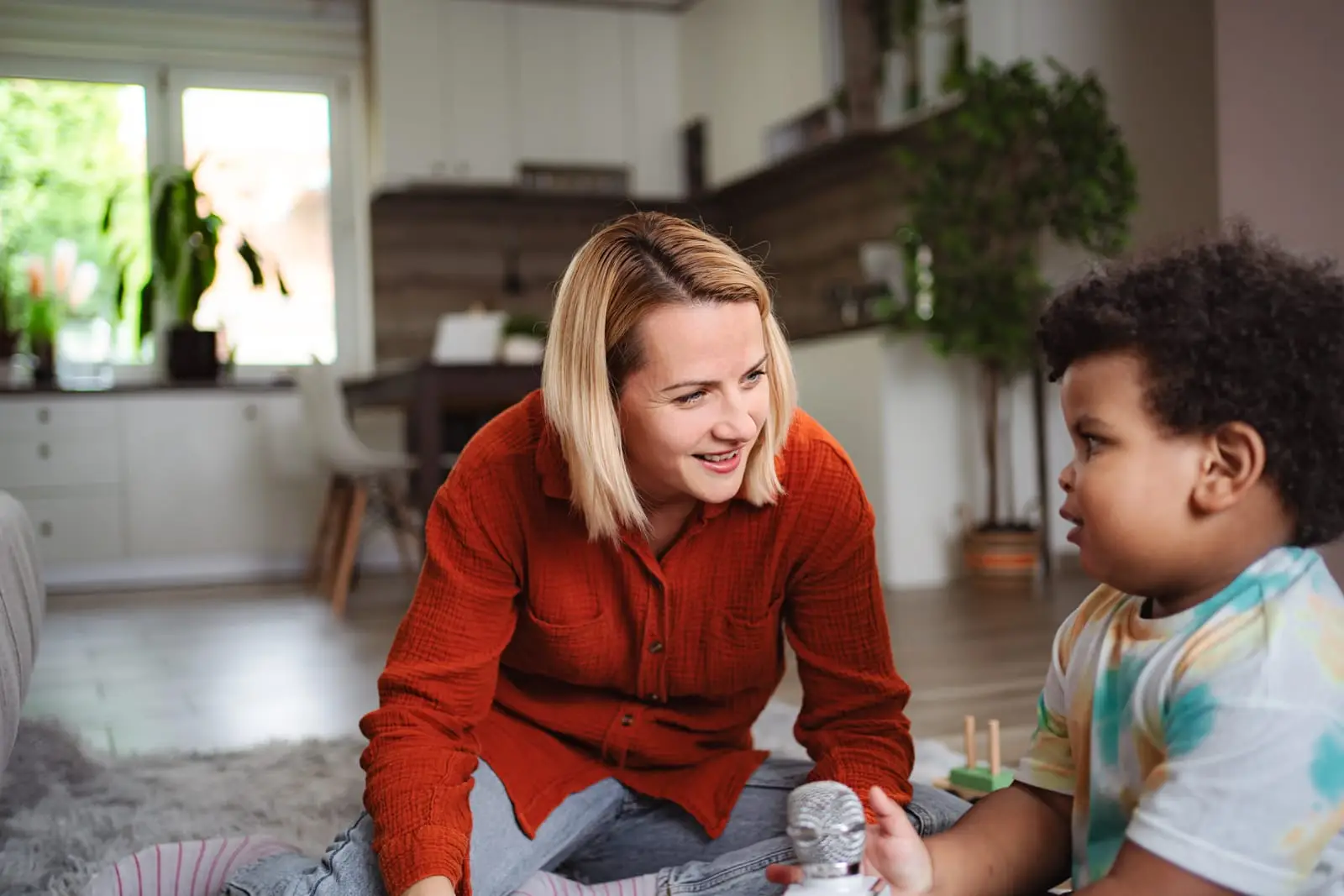
Child focus or the Family Projection Process is one of Murray Bowen’s eight concepts of Family Systems Theory. Here are five research backed insights that can help you as a parent and/or a leader.
Show Notes:
Child Focus and the Family Unit: A Comparison of Families with Higher and Lower Child Symptomology by Phillip Klever
Family Projection Process — The Bowen Center for the Study of the Family
Become a Patron for as little as $5/month.
Subscribe to my weekly Two for Tuesday email newsletter.
Welcome to Episode 356 of The Non-Anxious Leader Podcast. I'm Jack Shitama. If you are new to this podcast, you can connect with me at jack@christian-leaders.com with your questions, comments, and suggestions for future episodes. You can get more resources at thenonanxiousleader.com, where you can find out about my coaching practice, the books that I've written, the courses that I offer, and my speaking and engagements. You can also subscribe to my Two for Tuesday email newsletter at the website or at the link in the show notes. Finally, if you would like to support my work for as little as $5 a month, you can find a link in the show notes that will give you all the details. Thanks in advance for your consideration. Now, without further ado, here is episode 3, 56, Five Implications of Child Focus for Families and Leaders. Why are siblings who are raised by the same parents so different in how they relate, regulate, and show up in the world? One of Murray Bowen's eight concepts of family systems theory is the family projection process, also known as child focus. In family projection or child focus, marital anxiety and emotional fusion don't disappear.
They get redistributed. Couples carry a baseline level of tension shaped by how fused they are. That is, to what extent there is a lack of self-differentiation in the relationship. Some examples of this type of fusion include when one partner mirrors the emotions of the other, treating them as their own and feeling the need to fix it. That's a sign of fusion. Another is when neither can make a decision without the other's approval, and we language erases I language. Still another is when one partner acts as the other's emotional regulator or therapist, or when one partner becomes a perpetual caretaker and the other a care receiver. How they deal with the tension that comes from fusion can show up as withdrawal, that is, greater emotional distance, conflict, or a pattern where one partner yields, that is, becomes more adaptive and the other grows more assertive. Another less obvious This response is triangling. The couple unconsciously redirects that anxiety onto a child or sometimes onto another adult in the household, like a grandparent. According to the theory, when a child becomes the focal point of parental anxiety. Whether the attention is worried, protective, admiring, or controlling, that child's developing emotional reactivity will lock into a reciprocal loop with the parents.
In In other words, the parental focus will increase the child's reactivity, which will continue the need for parental focus because of their concern for the child. The child that receives this focus tends to be more relationship sensitive, less able to self-regulate and more vulnerable to symptoms than their siblings. Every family does this to some degree, but what varies is the intensity. Where the process is intense and persistent, the theory predicts that anxiety will not be evenly distributed, and typically, one child will carry a disproportionate share of the family's anxiety and its emotional consequences. This child is more likely to have heightened needs for attention or approval, self blame, excessive responsibility for others' feelings, or impulsive efforts to relieve anxiety, traits that increase the child's risk for symptomatic problems. Of course, the intensity of projection varies between families and among young siblings. Children who are the focus may become either overdependent or precociously attuned to parental moods, while less focused siblings often develop steadier, more self-differentiated functioning. The way to deal with this is to increase parental differentiation, which reduces triangling, and to rebalance attention so parental anxiety stops driving a child's identity and symptoms. Of course, this is what the theory says.
Let's see what the research shows. In episode 354, I unpacked Philip Cleaver's research on the importance of extended family contact. When I was preparing for that episode, I ran across another article by Cleaver, Child Focus in the Family Unit: A Comparison of Families with Higher and Lower Child Symptomology. Cleaver used the same data set as I described in episode 354, and if you want to find out more about that, listen to that episode. In this case, he compared five families with high levels of child symptoms with five families with low levels of symptoms. He writes, Bowen theory's concept of the family projection process hypothesizes that the child who is imbroiled in the most intense interactions with the parents, whether positive and or negative, tends to develop more relationship sensitivity, less self self-regulation and greater susceptibility to high levels of symptomology as compared to their siblings. All families engage in this process but vary in the level of intensity, and as Bowen said, the process is so universal, it is present to some degree in all families. Cleaver's study, though limited, affirmed the theory. He found that first, families with higher child symptomology talked more about their children and made more worried and fewer positive comments overall compared with low-symptom families.
This is somewhat different than the theory, which states that even if the overall focus is positive, if it's more intense for one child than the other, then the child will likely be more symptomatic. I don't think Cleaver's study refutes this given its small sample size. It just happened that the primary focus tended to be more negative than positive. I still believe it's possible that a family can have intense positive focus on a child, which makes it more difficult for that child to grow in self-differentiation. This is somewhat affirmed in a second finding that in most families, parents focus disproportionately on one child, that is, the focused on child. That child often received both the most worried and the most positive comments, and frequently had higher symptom scores. Again, I think of focus in terms of emotional intensity, and when that intensity and/or anxiety is not evenly distributed, the child that is focused on suffers. Third, high symptom families produce more statements expressing strong identification or attachment. That child is just like me, or we are very attached with the focused child, which is consistent with greater togetherness or fusion. In other words, when parents were less differentiated and they define themselves in terms of a child, this created emotional fusion, which resulted in lower self-differentiation in the child as well.
Fourth, high-symptom families reported more parenting and marital tension and more triangling patterns, suggesting that marital anxiety and reactivity were often displaced on children. Bowen would predict that to some extent there is always a triangle between two parents and a child. Cleaver's research affirms this. In fact, in the triangles that had the least child focus, that child was often the least symptomatic in the sibling group. Finally, low symptom families made a higher proportion of positive comments about marriage and parenting, and high symptom families comments about marriage and parenting were predominantly tense. This would indicate that overall marital or family stress was a factor in child symptoms. In all the families, there tended to be a particular child that received more focus than the others. However, in the low-symptom families, there was less difference in symptoms among siblings, whereas in the higher-symptom families, the recipient of intensity had more symptoms. My takeaway from this is that child focus by itself may not necessarily predict symptoms in the child. However, when there is more stress on the family and the parents are unable to manage that stress on their own, the child suffers. Others. Another way to say this is that self-differentiated parents are better able to manage stress without putting it on their children.
Edwin Friedmann referred to this when he wrote that a pastor's biggest task is to act as a circuit breaker between the anxiety of the congregation and their own nuclear family. Whether it's the congregation or any other of life's many stresses, the role of a parent is to manage it without placing anxiety on the children. The analogy for leaders is clear. Your role as a leader is not to focus your anxiety on those you lead. Focus on your own functioning without defining or blaming others. Take responsibility for self and don't focus your intensity on the same person all the time. To the extent that you vary your intensity with others, whether they are your children, members of your extended family, or those you lead, it will create healthier emotional space in the system. That's it for episode 356. Quite technical, but I think very helpful in understanding the family projection process or child focus and how it can help us to function better as parents and leaders. Don't forget, you can connect with me at jack@christian-leaders.com, and you can find more resources at thenonanxiousleader.com. If you have found this episode helpful, please share with someone who might benefit, and please leave a review on your podcast platform of choice.
Thanks in advance for your help. Until next time, go be yourself.