
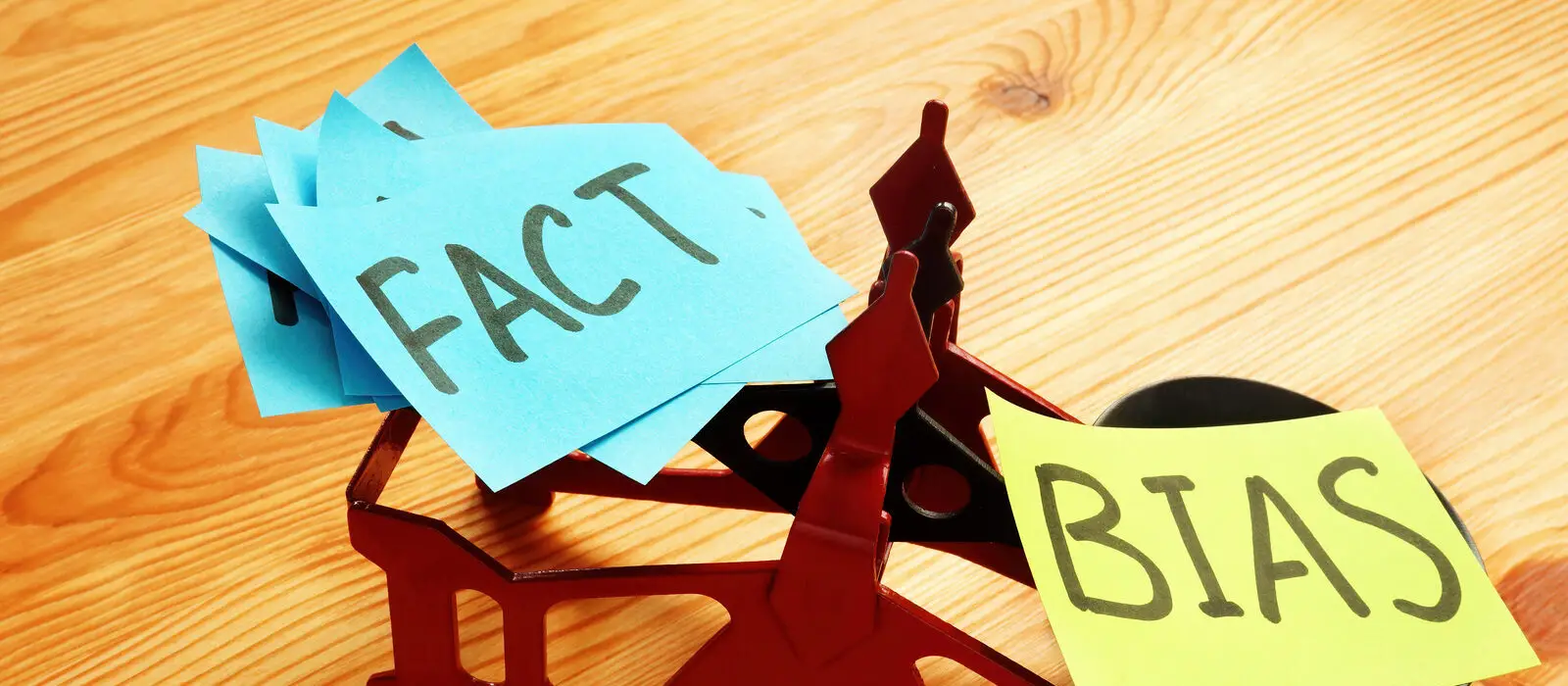
The political, cultural and theological divisions continue to widen. A non-anxious leader understands why AND how to respond.
Show Notes:
Only My Opinion Counts: Myside Bias by Jamie Hale, M.S.
The Bias That Divides Us: The Science and Politics of Myside Thinking by Keith E. Stanovich
Become a Patron for as little as $5/month.
Subscribe to my weekly Two for Tuesday email newsletter.
Welcome to Episode 355 of The Non-Anxious Leader Podcast. I'm Jack Shitama, and I am traveling again, so two things: one, I forgot to bring my good microphone, and two, I'm being quiet because everyone else in the house that we are renting is asleep. Anyway, if you are new to this podcast, you can connect with me at jack@christian-leaders.com with your questions, comments, and suggestions for future episodes. You can find more resources at thenonanxiousleader.com, where you can find out about the courses that I offer, the books that I've written, my speaking engagements, and my coaching practice. You can also subscribe to my Two for Tuesday email newsletter at the website or at the link in the show notes. Finally, you can support my work for as little as $5 a month. I'll put a link in the show notes, and I appreciate your consideration.
Now, without further ado, here is episode 355, a rebroadcast of three Ways Non-Anxious Leaders Respond to Political Division.
Today's episode was inspired by a lecture I attended this week at the Center for Family Process. The Center for Family Process was founded by Edwin Friedmann, and its current leaders, as well as many of the attendees of the lecture, actually knew and worked with Ed Friedmann. So it's as close as I'm going to get to him these days since he passed away in 1996. Anyway, the lecture was given by Andrea Sharra, who worked for many years with Murray Bowen at the Bowen Center for the Study of the Family at Georgetown University. Shara's lecture was particularly timely because she talked about the systems aspect aspects of political division, and with the midterm elections coming up, and given how divided our country is, I thought it would be helpful to understand these dynamics as well as what you can do about it as a non-anxious leader. Of course, these divisions are widespread. My own denomination is splitting over human sexuality and is currently arguing over the number of bishops that should be elected. In her lecture, Shara introduced me to concept of mySideBias, which she says is one of 201 cognitive biases. According to an article in psychcentral.
Com, mySideBias is, The tendency for people to evaluate evidence, generate evidence, and test hypotheses in a manner biased towards their own opinions. Mysidebias is not correlated with intelligence. People of high intelligence can have blind spots and filters which make it difficult for them to see that other people might disagree. And while some research shows that the more years of college someone has, the less susceptible they are to my side bias, this research is really inconclusive. Therefore, I think it's best to just assume that we are all susceptible to my side bias, regardless of how much intelligence or education we have. It's also important to note that my-side bias is most prevalent when people are not given explicit instructions to the contrary. That is, when people are told to try to look at things objectively and not be biased, they do a better job of evaluating the beliefs values and opinions of others, especially those with whom they disagree. Keith Stanovic, author of The Bias That Divides Us, The Science and Politics of My Side Thinking, maintains that we are not in a post truth society, but our current political division is because we live in a my-side society.
According to Stanovic, we still value truth and facts, but because of my-side bias, we can't agree on what those are. This makes a whole lot of sense to me. One possible explanation for my side bias is that when people store beliefs and values in the brain, it creates a structure that prevents conflicting beliefs and values from being stored. While While we don't know this for certain, what we do know is that my side bias does prevent us from being objective about the beliefs and values of others. One thing I know from my own experience is that people don't negotiate their closely held values. They are biased towards their own opinions and have a difficult time accepting that others could disagree, let alone being willing to hear how others beliefs and values might inform their own. This is especially true when one lives in an echo chamber where all we hear are the beliefs and values that reinforce our own my-side bias. Think Fox News or MSNBC or any group chat where everybody believes the same thing. This type of echo chamber leads to the second thing that Shara says, reinforces political division, and that is tribal or in-group loyalty.
Tribal loyalty has evolution disciplinary roots in the need for humans to survive. There was a time when the threats from starvation, predators, and enemy tribes were so great that one could not survive without the community, without the tribe. Therefore, tribal loyalty became the most important component in community and individual survival. Tribal or in-group loyalty is the epitome of surrounding togetherness pressure, where conforming to the norms of the system are not only desired but they are essential. While it's still true in mammal hierarchies, and it was true back in tribal times, even today, in-group loyalty has benefits such as increased status, increased It's positioned in the hierarchy and tangible benefits such as higher income and better professional connections. According to Shara, in-group loyalty creates three problems. First, there is a lack of awareness because we are in an echo chamber. My side bias filters everything that we disagree with in a way that prevents us from seeing the perspectives of others. The second thing that in-group loyalty does is it creates automatic responses. We react automatically when we are challenged, either reactively or adaptively. Either we get defensive and fight back or we give in rather than self-differentiating and saying what we believe.
Again, this is evolutionary. It goes back to the time when survival depended on quick reactions and the ability to know exactly what to do, such as go warn the tribe that a threat was coming. It goes to the concept of the amygdala hijack, where when we perceive a threat, it automatically bypasses our neo cortex, our thinking brain, and immediately goes to our fight, flight, or freeze response. When combined with my side bias, this explains that when somebody's beliefs or values are challenged, why they react automatically, why they get defensive or just give in. The third problem with in-group loyalty is that it creates a tendency to go along with the group. Again, this is surrounding togetherness pressure at work. Even though our survival may not depend on whether or not we agree with the group, it can often feel like it, and so we just go along without expressing that we might disagree. At least From my perspective, it is not difficult to see how my side bias and in-group loyalty have contributed to our political, cultural, and theological divisions. The question is, what can a non-anxious leader do about it? The first thing you can do as a non-anxious leader in the face of political divisions is to exercise intellectual humility.
This is being able to evaluate the accuracy of your own beliefs and even change them when presented with evidence, even compelling evidence, that you may be wrong. I believe this is a key component of self-differentiation. It's knowing where you end and another begins. It's being comfortable enough in your own position that you know you might be wrong and that it's okay for others to disagree. Intellectual humility gives you the freedom to say what you believe while giving others the freedom to disagree. The second thing you can do is avoid a conflict of wills. Because my side bias and in-group loyalty create automatic reactions, we know that by challenging the beliefs and values of another, you will likely get a reactive response. This is not helpful. Remember, it's process, not content. I find it helpful to remind myself that I could be wrong, and it's okay for someone else to disagree. Rather than trying to convince them of your their own rightness, understand that it's more important to let them be who they are while maintaining emotional connection. This leads to the third thing that non-anxious leaders can do, and that is to listen with curiosity.
Listening with curiosity reinforces emotional connection and reduces the likelihood that you will get into a conflict of wills. While the object is not to convince the other to come over to your side, research It shows that you're more likely to do that if you're curious and are truly listening to the other. To me, the important point here is that non-anxious leaders don't focus on whether others agree or disagree. They are focused on where they are headed, where they believe God is leading, and then they try to act in accordance with that in a way that's consistent with their own beliefs, values, and goals. This creates an integrity that is attractive to others. When you do this, it may not convince others to agree with you, but they will likely respect you and give you the benefit of the doubt. Remember that whether you are trying to lead change in a congregation, organization, denomination, or nation, you will not get anywhere by focusing on the wrongness of others. In fact, many times, the change that we're trying to lead has nothing to do with the political divisions. So if we get involved with those, we lose the opportunity to help people to see what the preferred future might look like.
Regardless, the critical competency in all of this is the ability to maintain a non-anxious presence. This means others know where you stand even if they don't agree with you, and they also know that you care enough about them to stay emotionally connected. Being non-anxious and being present, that is, emotionally connected, won't always work, but lasting change will rarely work without it.
That's it for episode 355. Remember, you can connect with me at jack@christian-leaders.com, and you can find more resources at thenonanxiousleader.com. If you found this episode helpful, please share it with someone who might benefit, and please leave a review on your podcast platform of choice. Thanks in advance for your help. Until next time. Go be yourself.