
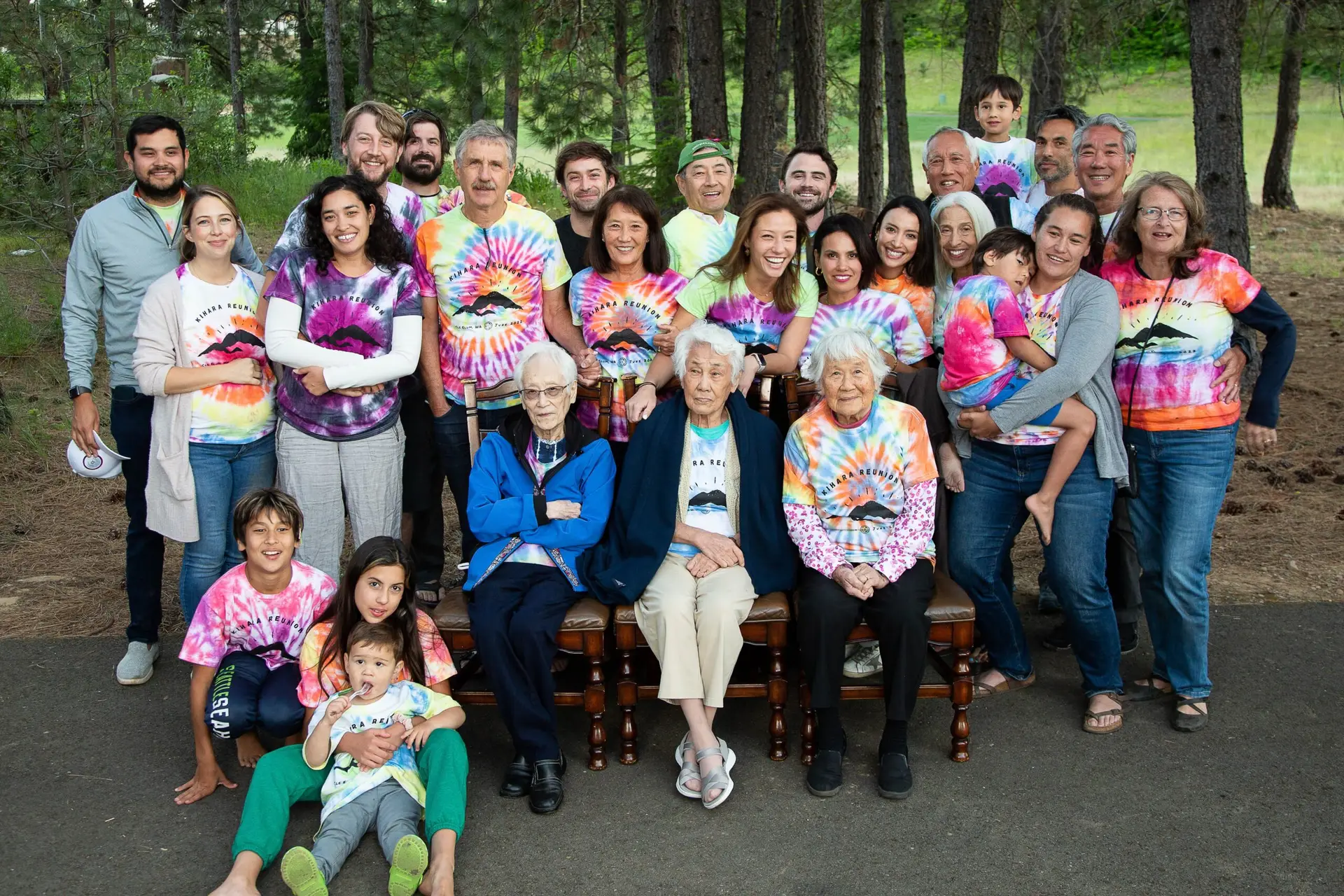
Phillip Klever studied the impact of intergenerational emotional connection on families of origin. Here’s what he found and what it means to you.
Show Notes:
Cutoff: The challenge of the parent/child relationship by John Bell, MDiv.
Extended Family Relationships: A Comparison of High and Low Symptom Families by Phillip Klever
Become a Patron for as little as $5/month.
Subscribe to my weekly Two for Tuesday email newsletter.
[00:00:01.380]
Welcome to Episode 354 of The Non-Anxious Leader Podcast. I'm Jack Shitama. If you're new to this podcast, you can connect with me at jack@christian-leaders.com with your questions, comments, and suggestions for future episodes. You can find more resources at thenonanxiousleader.com, where you can find out about my coaching practice, my speaking engagements, the books that I've written, and the courses that I offer. You can also subscribe to my Two for Tuesday email newsletter at the website or at a link in the show notes. If you would like to support my work, you can do that for as little as $5 a month at the link in the show notes. Thanks in advance for your consideration. Now, without further ado, here is episode 354, The Importance of extended family relationships. The idea for this episode came from a Substack post, Cut off the Challenge of Parent-Child Relationship by John Bell.
[00:01:40.040]
I'll put a link in the show notes. In this post, Bell references research by Philip Cleaver in a published summary from 2016. I'll put a link to that in the show notes as well. Cleaver did a study that compared extended family contact patterns and cut off over a 15-year period. In it, He identified what he called high-symptom and low-symptom families. High-symptom families had more health problems, both physical and mental, as well as greater incidence of separation and divorce. Cleaver's aim was to determine whether multi-generational connection correlates with lower chronic anxiety, better relational stability, and fewer psychiatric and health problems across families. To do this, he measured frequency of contact, geographic proximity, participation in family events, and incidents of emotional or geographic cutoff. One limitation of the study was that it included a small sample size of only five high symptom and five low symptom families, respectively. That said, these came from an original sample of 51 families that started the study and 40 families that provided information after 15 years. The 10 couples were selected from the extremes of this latter group. That is, of the 40 families that completed the study, Cleaver chose the five families that had the most symptoms and the five families that had the fewest symptoms.
[00:03:11.440]
He hypothesized that, more symptomatic families would reflect lower levels of differentiation and/or higher levels of anxiety. Less symptomatic families would reflect higher levels of differentiation and/or lower levels of anxiety. That is, he believed that there was a correlation between emotional connection with extended family and self-differentiation and/or anxiety. As you would think, greater emotional connection would correlate to greater self-differentiation, lower anxiety, and fewer symptoms. Cleaver's study analyzed what Murray Bowen defined as viable contact. Bowen wrote, The more a nuclear family maintains some viable emotional contact with the past generations, the more orderly and asymptomatic the life process in both generations. Think of viable emotional contact as the opposite of emotional cutoff. It's ongoing connection and regular interaction with members of other generations and one's family of origin. It's characterized by open communication, participation in family events, and relationships that provide ways to manage anxiety and diffuse family reactivity. I've shared this story before, but I think it's worth sharing now. When one of my sons was five years old, he asked, Dad, when I get married, will my wife be a part of the family? And I said, Of course. He said, No, I mean, will she get to come to Hatteras with us?
[00:04:48.200]
What he meant by that was even when he was five, we had already been going to Cape Hatteras with my wife's family, with extended family, her two sisters, their families, her brother, my wife's parents who were living at the time. We had been going to Cape Hatteras with extended family since he had been born. It's all he ever knew. To him, that meant being a part of the family. These are the type of extended family connections that Cleaver was studying, and I realized even at that time what a blessing it was to have them. What did Cleaver study? Fine. Let's look at the results. It's not a surprise that the research confirmed Bowen's contention that intergenerational emotional connection and healthy functioning are connected. I say connected, or a better term would be correlated, because it's not clear that self-different differentiation causes intergenerational connection or vice versa. My thinking is that there is a symbiotic relationship between the two. That is, working on either one will increase the other. Cleaver found that low-symptom families maintained substantially more frequent contact with extended relatives and tended to live closer to them. They also attended more extended family events such as weddings and funerals.
[00:06:14.560]
In contrast, high symptom families displayed much higher rates of emotional and geographic cutoff and lower rates of contact. In short, the less emotional connection, even to the point of cutoff, the more health and relationship Cleaver concluded that, first, sustained multigenerational contact buffers family anxiety by diversifying relational supports and reducing the anxiety that comes from intense one-on-one relationships. When you have more options for connection in your family of origin, you have more ways to manage your anxiety. To the extent that this is true for others in the system, it is likely that overall anxiety is lower in the system. Second, cut off severs emotional regulation channels between generations, amplifying chronic anxiety and symptom expression. That is, when there is cut off, especially between generations, there is greater anxiety overall and more health and relationship problems. I would say this is related to the first conclusion in that when there is cut off, there are fewer relationship options for people to manage anxiety. For example, when a teenager is going through the normal adolescent challenges, they usually don't want to talk to their parents. If there is a grandparent, aunt, or uncle to talk to, that's helpful.
[00:07:38.580]
However, if there is cut off between the kid's parents and any one or more of these, it makes that option less likely. This puts more stress on the nuclear family and increases the potential for symptomatic behavior. Third, geographic closeness facilitates contact and family rituals such as funerals, weddings, and reunions that reinforces family continuity and reduces isolation. I'll note here that Edwin Friedmann warned not to equate physical distance with emotional distance. What he meant was that moving far away is not going to resolve issues of being too emotionally close, that is being fused, and/or when there is conflict and reactivity in a relationship. It may make it easier to ignore the issue, but it won't make it go away. That said, Cleaver's conclusion doesn't conflict with this. It just means that when people are closer geographically, it's easier to get together. You may be aware that on my mom's side of the family, we've had a family reunion every two years since 1996. Seven. I feel privileged that my parents prioritized attending those because most of my aunts, uncles, and cousins are on the West Coast. Most of those reunions have been out there. Since we live on the East Coast, it has made it more difficult to travel.
[00:09:01.800]
But my parents would not only pay for the lodging for anyone who attended, they would also subsidize travel if needed. Even though my father has passed, my mom still does this. I'll also say that in the few years that we have had a reunion on the East Coast, the West Coast family has been willing to travel. The point here is that physical proximity makes viable contact easier, but greater geographical distance doesn't have to make it harder. Finally, I want to go through three themes that Cleaver highlighted from his study. The first theme is that there is a continuum between emotional contact and cutoff. At one end, our higher emotional connections where participants made statements such as, I'm close to all my cousins. At the other end are superficial or cut off relationships. This is just what you would think. People are so emotionally distant that they have no real connection or they are cut off entirely. The in between on the continuum between emotional connection and cut off is characterized by statements such as, We are caring, but not emotionally deep. This reflects the middle ground. The second theme was that involvement or emotional connection can shift due to life events and/or anxiety.
[00:10:24.120]
People became either more or less connected when there was a death in the family, when there was a move, a the childbirth or health problems arose. This highlights that changes in the system create opportunities for changes in functioning. That is, you can use these as a chance to increase emotional connection, especially when there is too much emotional distance. This is consistent with Friedman's contention that life cycle ceremonies such as funerals, weddings, baptisms, retirements, etc, make the relationship system more flexible and thus create opportunities for healthy change. Of course, the converse is true. These things can increase anxiety, reactivity, and conflict. The question is, is there someone who can function as a non-anxious presence to help the system manage its anxiety? To me, the takeaway is whenever there are changes in your family of origin, think about who you might move closer to and how you might do this. The last theme is that parents have outsized influence on relationships with extended family. This seems obvious, but is important to note. Parents can either facilitate connection or obstruct it. Most parents don't tend to think about this as a part of their job, and to the extent there are unresolved issues with their own parents, a person will think less about the importance of intergenerational connection and will think more about how they can survive their own anxiety over the situation.
[00:11:55.740]
The irony here is that increasing intergenerational connection might provide openings for them to rework their relationship with that parent. I had a coaching client who was feeling stuck with their parents and was able to work around that by having conversations with an aunt and with a grandparent. They were eventually able to rework their relationship with their own parents, which family systems theory predicts would happen if they increased intergenerational emotional connection. So what does all this mean? I believe it provides markers to do your own family of origin work? You can look at the intergenerational connection that is present or not, and then figure out how you can increase it. Who do you need to call or visit? What events have you been avoiding? What changes have occurred that might provide an opening for greater connection? These are just a few of the questions you can ask to look at the intergenerational connection and figure out how to move closer and to make a difference as a non-anxious presence. Remember that intergenerational transmission is only destiny if you aren't aware of it or you ignore it. If you are willing to do the work of moving closer to others, you will improve things for yourself and others, regardless of where things are now.
[00:13:18.280]
Future generations will thank you, and it will help you grow as a non-anxious leader. That's it for episode 354. A little more clinical than usual, but I thought that the research was really interesting and helpful. Remember, you can connect with me at jack@christian-leaders.com and find more resources at thenonanxiousleader.com. If you found this episode helpful, please share it with someone who would benefit and please leave a review on your podcast platform of choice. Thanks in advance for your help. Until next time. Go be yourself.