
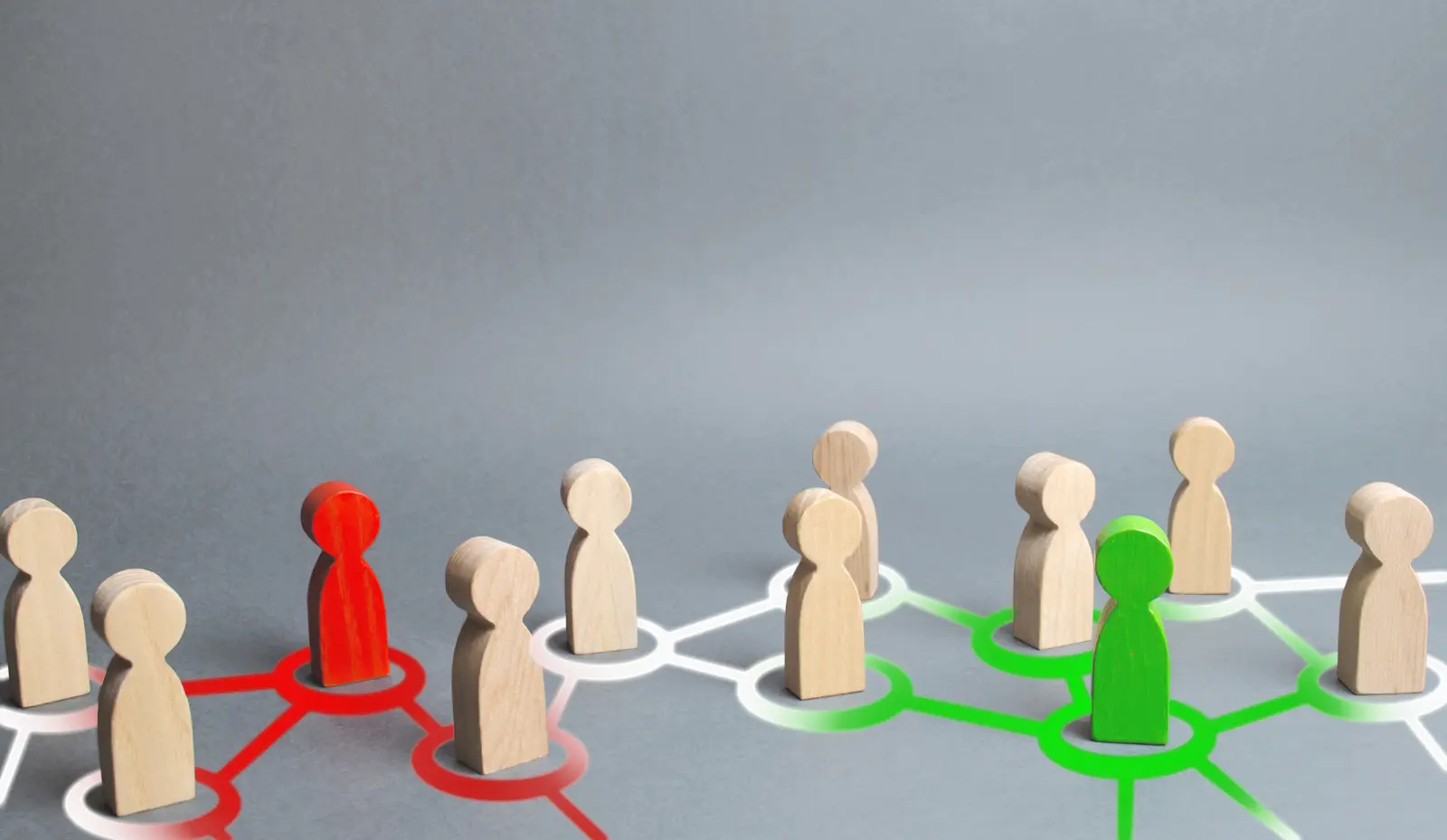
Observing the patterns in a system, not just the behavior of individuals, can help you to better self-differentiate. Here’s how.
Show Notes:
When the Family Tightens Up – by Kathleen Smith
Become a Patron for as little as $5/month.
Subscribe to my weekly Two for Tuesday email newsletter.
[00:00:01.380]
Welcome to Episode 349 of The Non-Anxious Leader Podcast. I'm Jack Shitama. If you are new to this podcast, you can connect with me at jack@christian-leaders.com with your questions, comments, and suggestions for future episodes. You can find more resources at thenonanxiousleader. Com, where you can find out about the courses that I offer, my coaching practice, my speaking engagements, and the books that I've written. You can also subscribe to my Two for Tuesday email newsletter there or at the link in the show notes. Finally, if you'd like to support my work for as little as $5 a month, you can go to the link in the show notes. Now, without further ado, here is episode 349, How Seeing System Patterns Helps You to be a Non-Axious Presence. The The idea for this episode comes from a sub stack post by Kathleen Smith, When the Family Titans Up.
[00:01:37.680]
According to Smith, people spend a lot of time feeling personally offended by how a group functions, whether it's a family, congregation, organization, or country. This is because we attribute motive to everything. The example she uses is getting mad at the couch when you sub your toe. Instead of feeling offended, she recommends getting curious about the predictability of the group. I would call this seeing the relationship patterns in the system. When you observe the patterns in a system, you begin to see the recurring interactions differently. You notice the emotional triangles at work and see who is taking responsibility for self and who is not. For example, when you realize that one family member always unloads on another and it has more to do with their own unresolved issues, it's easier to show compassion for them even as you don't over function for them. It will also help you better understand what makes you tick. Why do the same interactions always provoke your reactivity or adaptivity? Where does that come from in your family of origin? What is your go-to reaction when you are anxious? When you are able to identify relationship patterns in your family of origin and how they show up in your own functioning, I believe you are better able to understand yourself without blaming others or yourself.
[00:03:01.340]
Smith notes that people getting offended happens more often when a system is under stress, or as she says, it tightens up. Quoting directly from her post, You might see less tolerance for differences in thinking, less flexibility around traditions, people feeling threatened by the contact you have with others, loss of group processing, and fewer individual conversations, more people triangled in to worry or take sides. Excessive bureaucracy. Decisions are focused on keeping things steady. More worry about whether people like you. When anxiety levels increase in a system, it gets harder for people to self-differentiate. Instead of defining self and staying connected, they manage their anxiety in other ways. In Smith's examples, you have triangles, surrounding togetherness pressure, the lack of taking responsibility for self, and less flexibility to respond to challenge. The irony here is that in trying to manage the anxiety that comes from stress, people make it more difficult to respond to the challenge that is creating the stress to begin with. Smith asks, What do you do when a system tightens up? One option is to go along with it. This is adaptive behavior. You give in to the surrounding togetherness pressure because you don't feel that you can self-define in a calm manner while staying emotionally connected.
[00:04:31.520]
Instead, you choose connection, but don't stand up for yourself. The second option she puts forth is distance yourself. This is another form of reactivity in which you neither argue nor agree, but you don't stand up for yourself either. Instead, you forego emotional connection to manage your anxiety. The third option she mentions is, Criticize every decision. This is classic reactivity where you seek to define others instead of remaining a non-anxious presence. Finally, Smith notes that prediction creates flexibility. I liken it to having X-ray glasses. You see the system in terms of patterns instead of individual behavior. For me, this enables me to manage my anxiety because I understand that any one person's behavior has more to do with how the system is functioning and less to do with them or me. Smith writes that prediction, or what I would say, observing system patterns, helps you to hold on to your thinking without trying to anxiously convert everyone to it. This is defining self without needing to define others. It helps you to curb the impulse to automatically disagree with everyone because it feels good. This is self-regulating your reactivity. It helps you not waste your energy trying to get everyone to function better.
[00:05:55.040]
This is taking responsibility for self without needing to over function for It helps you to be a little bit calmer than the person in front of you. This comes from self-awareness, reflection, preparation, and intentionality. When you observe system patterns, that is, when you try to predict how things will go, you won't always be right, but you'll more often be less surprised about what does happen than if you go into any situation unprepared. Being unprepared will more likely result in some form of reactivity. It helps you stay interested in the challenges. This is realizing that nobody gets the problem they can handle. If you can remain a non-anxious present, you have a better chance of addressing challenges, which leads to flexibility, capability, and resilience. Finally, it helps you hang in there when you might normally distance. This is the ability to stay emotionally connected even when it feels uncomfortable. This last point is really important. When systems tighten up and anxiety increases, it's really uncomfortable. Learning to live with discomfort is essential. Otherwise, you will fall back into the reactive and adaptive patterns that do little to reduce system anxiety and, in fact, increase it. If you are able to live with the discomfort while observing system functioning and not just the behavior of individuals, it will help you to take things less personally, to show more compassion, and to get more curious.
[00:07:32.720]
That's the mark of a non-anxious leader. That's it for episode 349. Remember, you can connect with me at jack@christian-leaders.com and get more resources at thenonanxiousleader.com. If you have found this episode helpful, please share it with someone who might benefit, and please leave a review on your podcast platform of choice. Thanks in advance for your help. Until next time, go be yourself.